
Seminar and Knowledge Dissemination Project on Identity Creation and Product Development from By-products of Trad Thong Pineapple in Trat Province
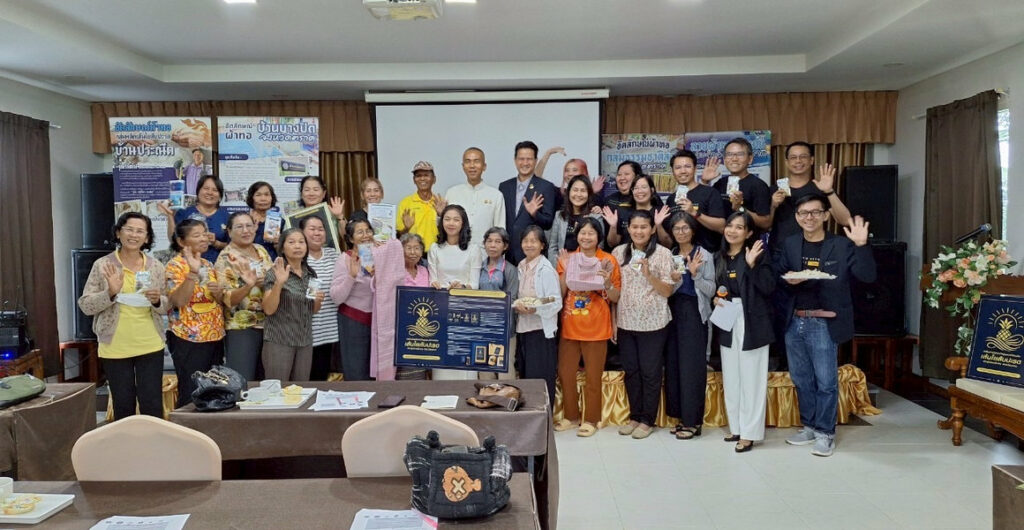
Trat Province is renowned for cultivating the “Trad Thong” pineapple, a significant economic crop of the region. However, by-products such as peels, leaves, and cores are often discarded as waste, leading to resource inefficiency and the loss of value-added opportunities. To address this issue, the project aims to create a unique local identity and develop value-added products from these by-products. It integrates interdisciplinary knowledge and research from multiple institutions, in collaboration with local communities, to promote practical applications of innovation and technology. This initiative is supported by the Ministry of Higher Education, Science, Research, and Innovation (MHESI) under the “Research Network Sandbox: Developing Young Researchers into Professionals (Batch 1)” program. The project aims to promote sustainable local development, optimise the utilisation of agricultural resources, and foster community-based economic growth through knowledge dissemination and academic engagement.
The objective of this project is
1. To promote the utilisation of by-products from Trad Thong pineapple through value-added product development.
2. To create and strengthen a distinctive local identity for Trat Province.
3. To transfer research-based knowledge and innovation to local communities.
4. To foster collaboration between academic institutions and community stakeholders.
5. To support sustainable economic development at the local level.
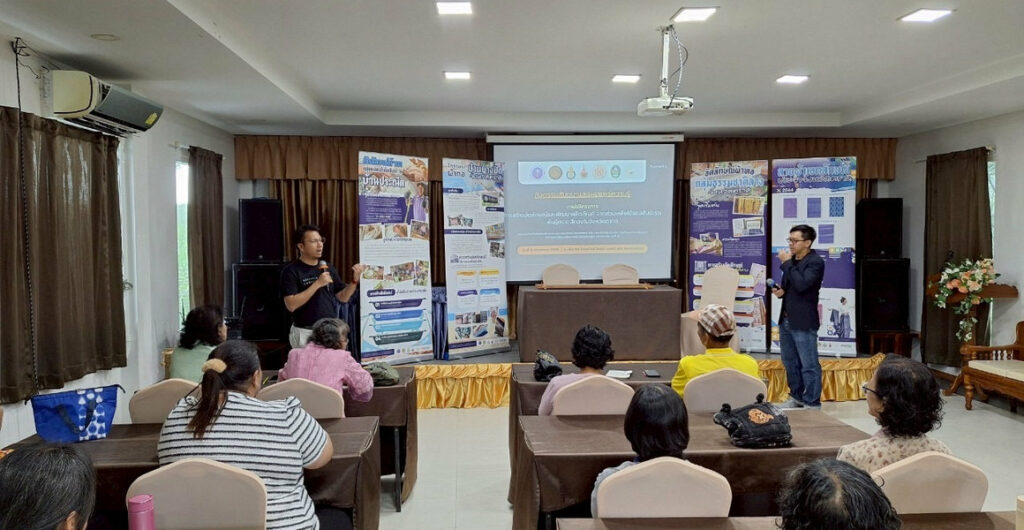
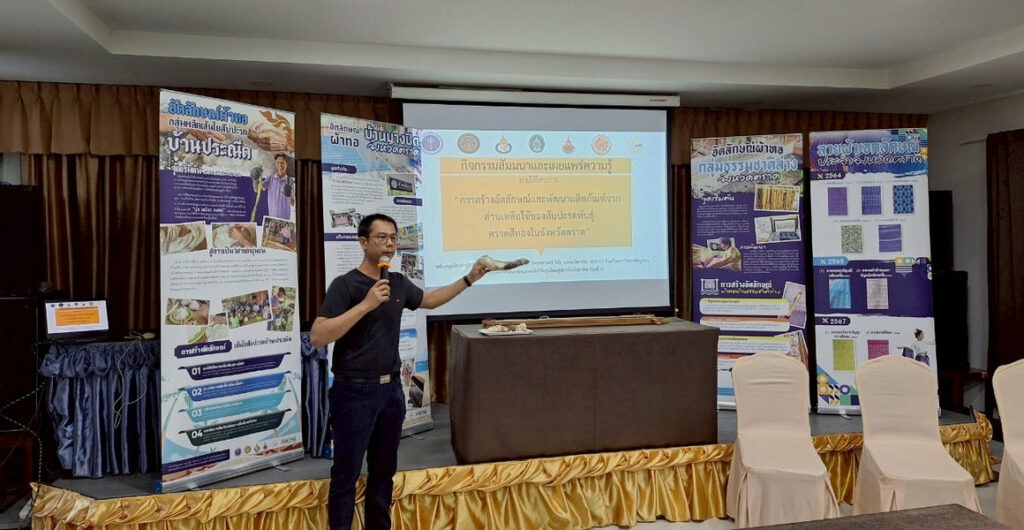
The project began with research and data collection on the by-products of the Trad Thong pineapple, such as peels, leaves, and cores, which possess potential for value-added product development. Researchers from multiple academic institutions collaborated to study the properties of these materials and developed prototype products through scientific and innovative processes, aiming for practical applications that benefit local communities. Subsequently, seminars and workshops were organised to disseminate research findings and transfer knowledge to residents. These activities emphasised community participation through learning, hands-on experiences, and knowledge exchange. The project also fostered a strong network of collaboration among researchers, academic institutions, government agencies, and the local population in Trat Province, promoting efficient resource utilisation and enhancing the economic value of local produce sustainably. Additionally, the project included a performance evaluation and lessons learned to inform future development. It aims to deliver tangible economic, social, and environmental benefits while serving as a model for community development, grounded in academic research and innovation.
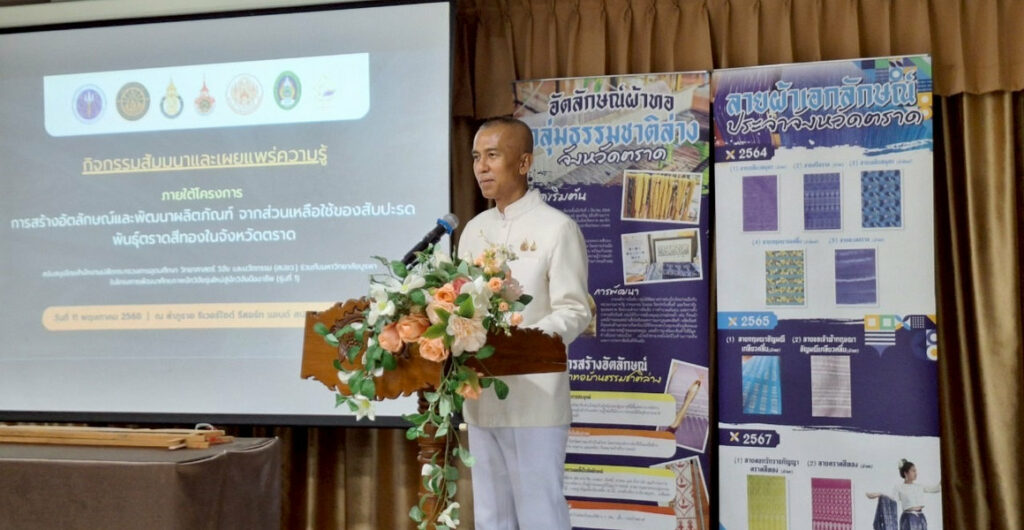
This project showcases the research capabilities of faculty members from the Faculty of Political Science and Law, Burapha University, in producing academic work that can be practically applied within local communities. By transforming research findings into prototypes of value-added products made from by-products of the Trad Thong pineapple, the initiative contributes to reducing agricultural waste and generating additional income for residents. The project aligns with several Sustainable Development Goals (SDGs), including poverty reduction, sustainable economic growth, responsible resource utilisation, and inclusive partnerships for development. It represents an effective integration of academic knowledge and community-based innovation, reinforcing local identity through culturally rooted products. Furthermore, the project serves as a model for how research in the social sciences can be translated into tangible solutions that support long-term, sustainable local development.
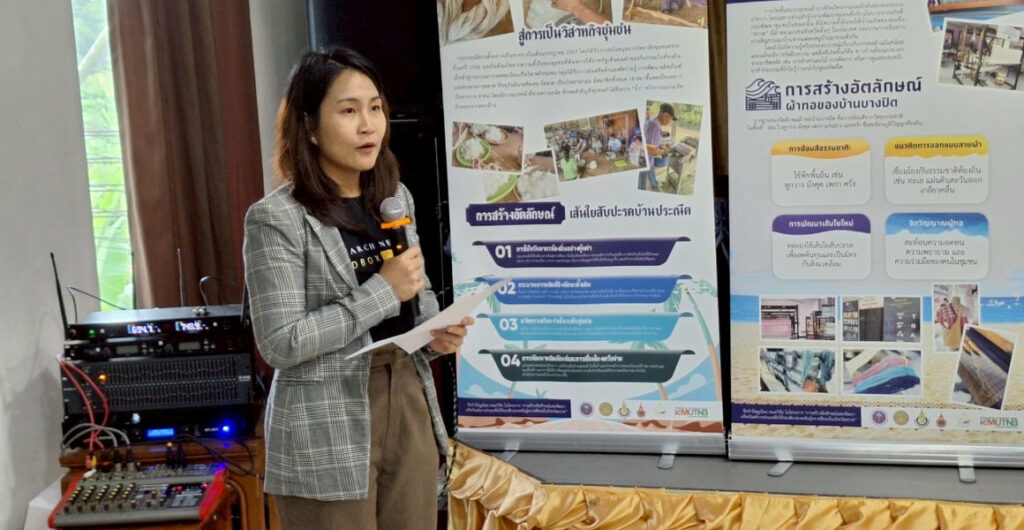
Project Leader: Miss Thouchanok Sattayavinit, Ph.D., Faculty of Political Science and Law