Local economy promotion of sustainable agriculture
community enterprise network in Nong I-roon sub-district, Ban Bueng District, Chonburi,
through integration of smart agriculture,agricultural product processing, and agricultural tourism
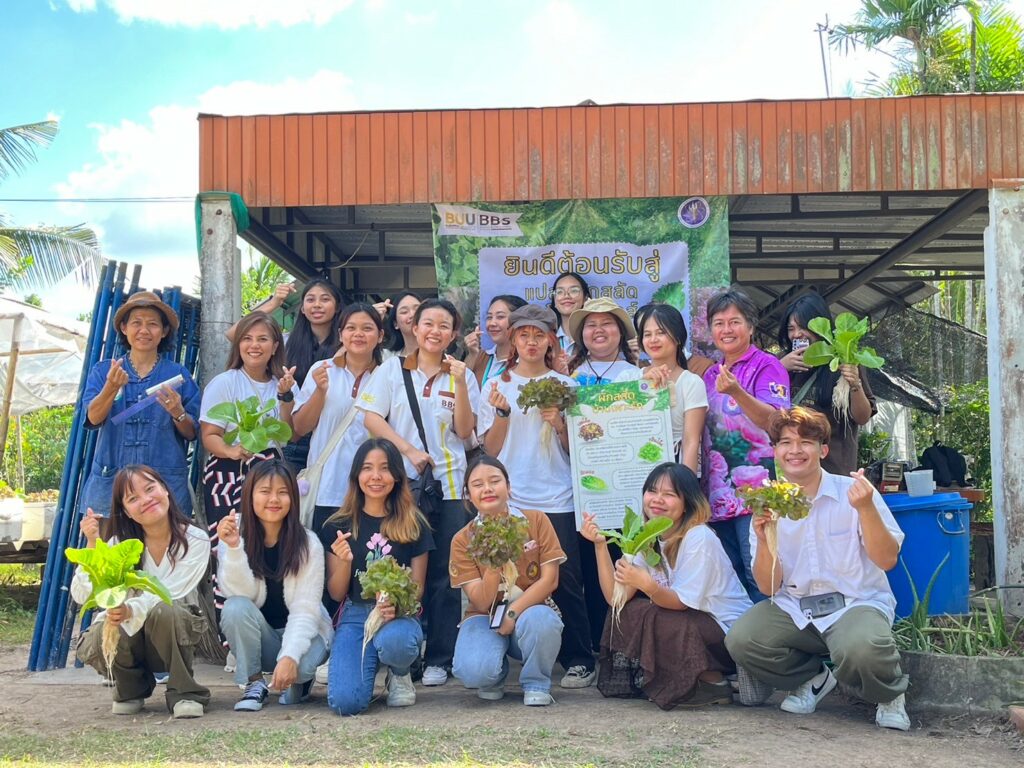
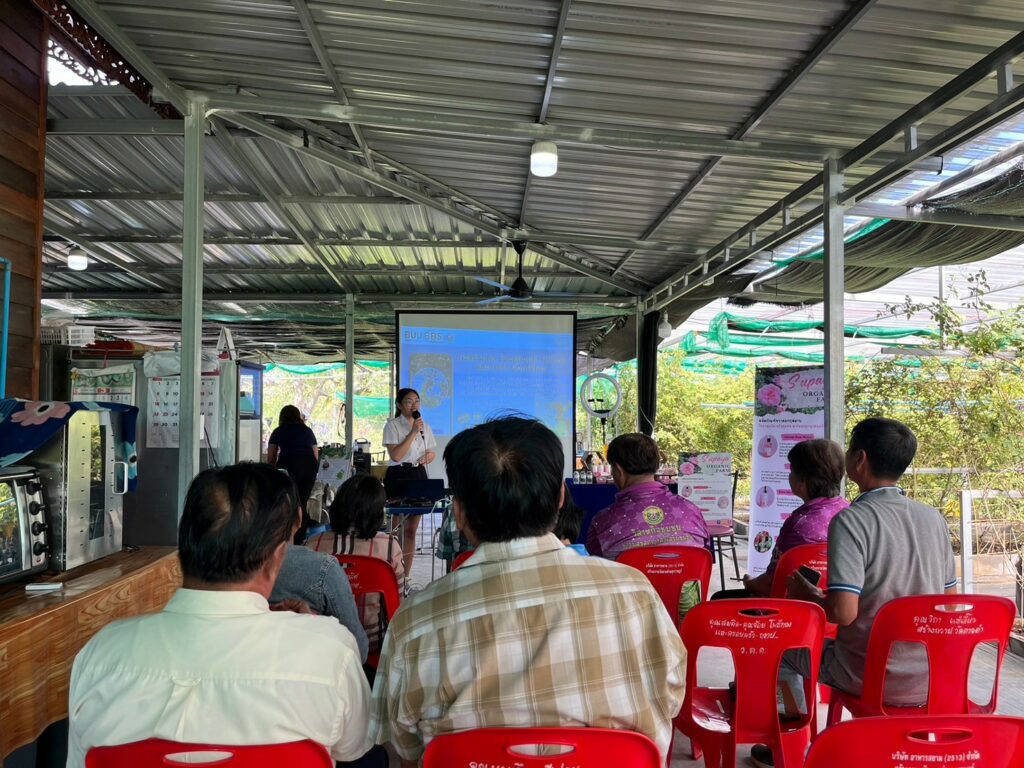
Local economy promotion of sustainable agriculture – community enterprise network project was organized on July 1 – Nov 30, 2023. This projects aims to enhance the grassroots economy of the community enterprise network in sustainable agriculture in Nong I-roon, Ban Bueng District, Chonburi, by integrating smart agricultural practices, agricultural product processing, and agritourism.
The objectives include: 1. Develop innovative agriculture practices for cultivating organic roses and organic egg production using technology to control water systems and monitor environmental conditions. This aims to reduce production costs by minimizing manual labour and optimizing water usage in agriculture. 2. Enhance the processing of products derived from rose essence and alternative proteins from egg production to increase their value and create a unique identity for the community’s products. 3. Develop agritourism by creating a brand and establishing agritourism routes, allowing the public to visit and learn about innovations and technologies firsthand. This initiative aims to increase the recognition and distribution of community products. The overall goal is to raise the income of farmers and community members in Nong I-roon, Ban Bueng District, Chonburi, by at least 20% by developing farmers and community members’ capabilities to access smart agricultural technologies and processing methods. This will enable farmers to engage in organic farming and contribute to the growth of a new tourist destination in Ban Bueng District, Chonburi Province, providing opportunities for people to learn and experience new things from the local community.
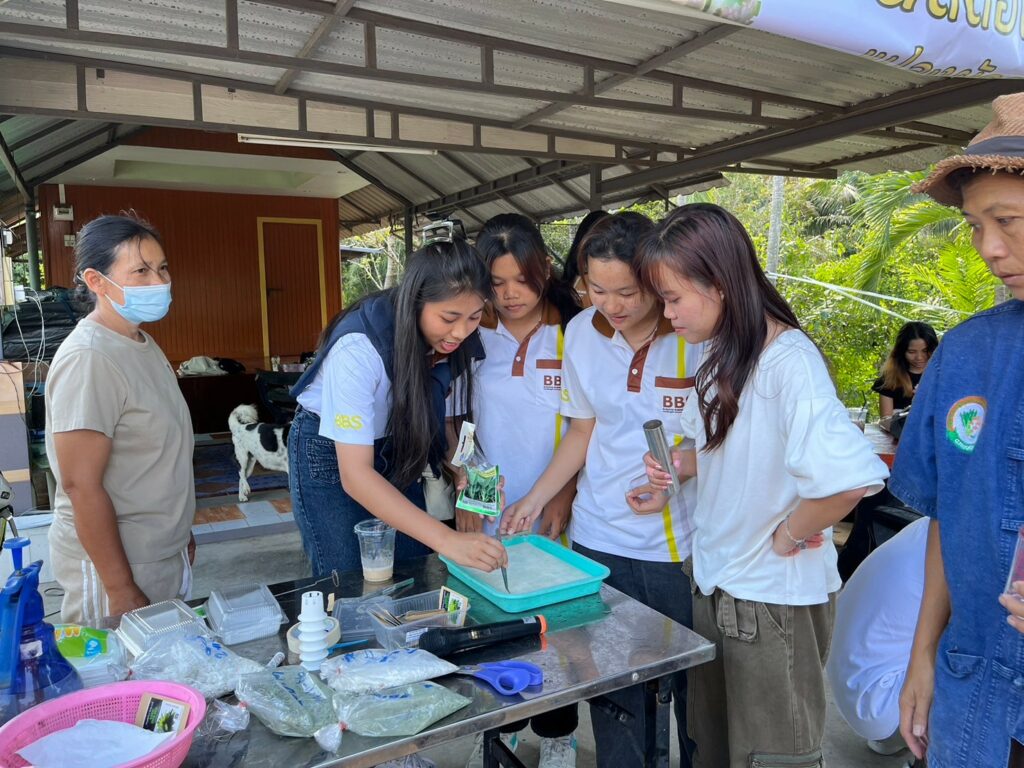
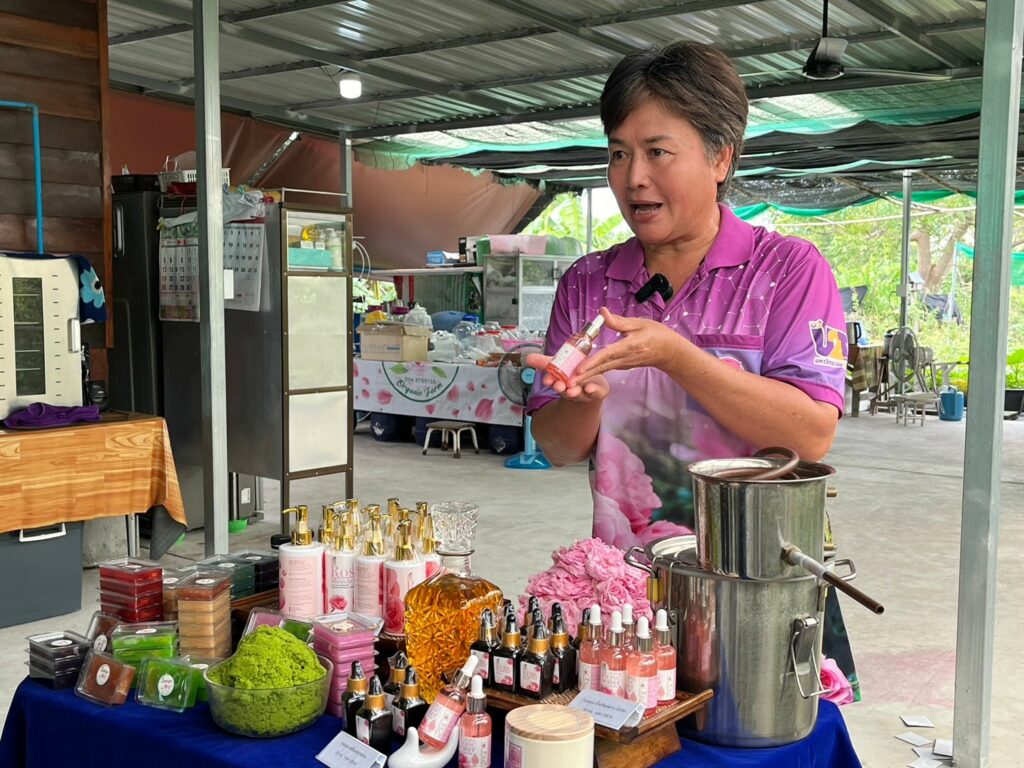
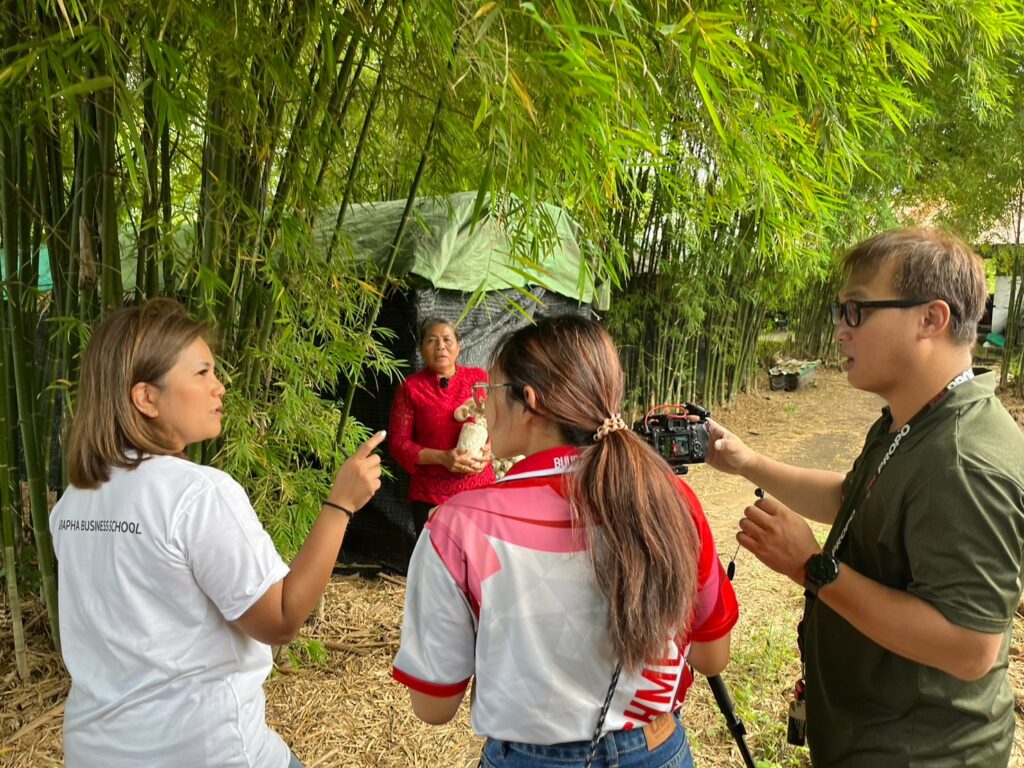
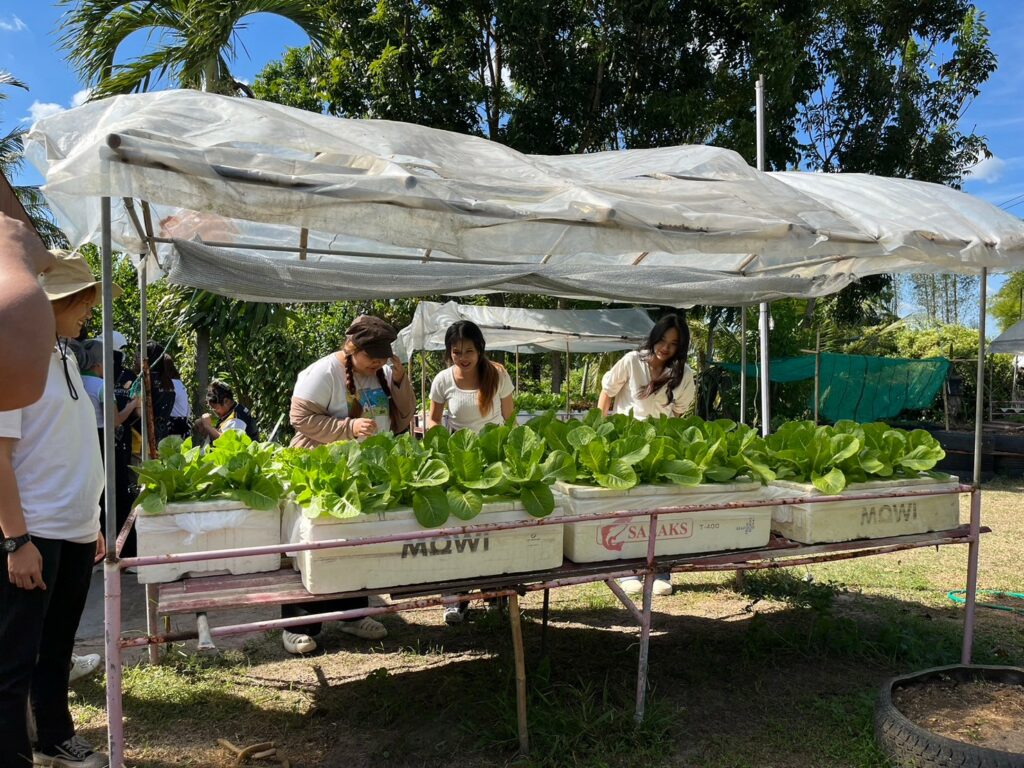
This project has been successfully implemented as planned, following the set objectives. It involved the development of students through problem-based learning processes leading to the installation of smart agriculture systems in rose farms and automatic solar-powered purified water production systems for aquaculture. The aim was to reduce water usage and ensure cost-effective water utilization in cultivation and processing. Research and development focused on products derived from roses and fish eggs, including distilled rose water and dried fish eggs. The goal was to provide the community with value-added products through science and technology.
Community engagement initiatives were undertaken to promote local products, increase sales channels, and enhance the visibility of community products to tourists. This resulted in increased product sales. An agritourism route was also developed for community enterprise groups, promoting sustainable resource management and tourism in the area. Collaboration was fostered with community enterprise networks, government agencies, private organizations, and the Eastern Special Development Zone, contributing to the community’s development. This collaboration instilled confidence in community members and networks in Burapha University and its related programs, fostering regional development in social, economic, and environmental aspects for the future.
Project Leader: Assistant Professor Chitlada Pinthong and Assistant Professor Salil Chanroj,