
The Mindful Wellness: Fostering Mental Wellbeing Exhibition
at the 2nd National Conference on Health Promoting Universities.
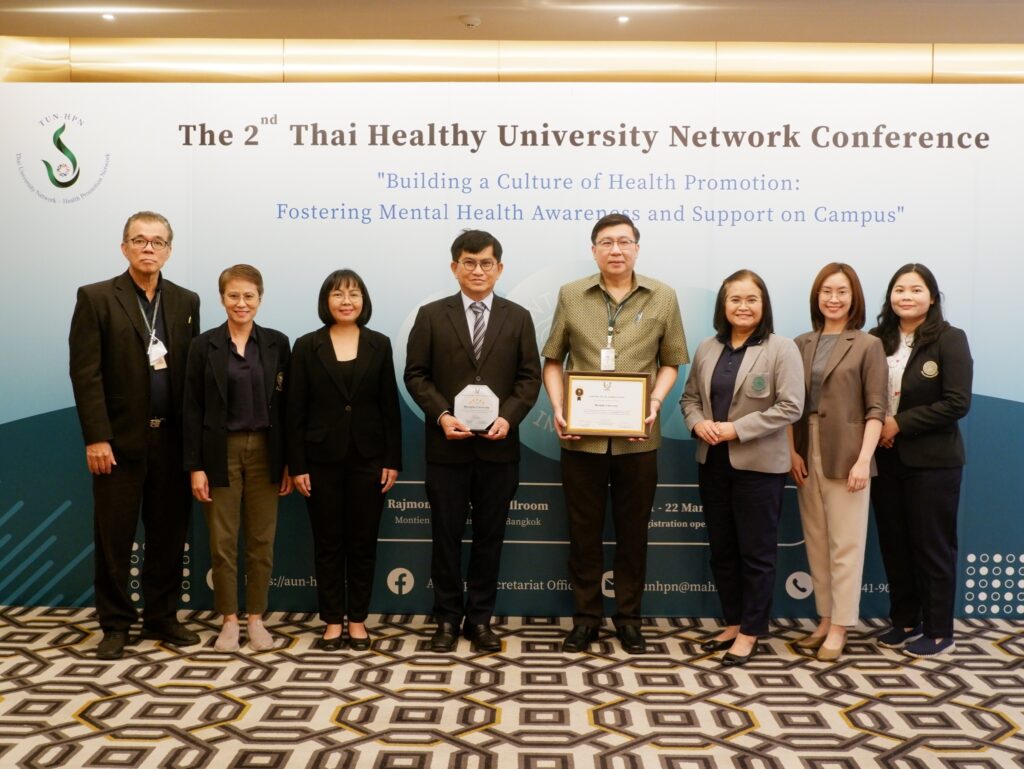
The Faculty of Medicine at Burapha University has been appointed as the university’s representative on the committee of the Thailand University Network for Health Promotion (TUN-HPN), a network under the ASEAN University Network-Health Promotion Network (AUN-HPN). This ASEAN-level network of health promotion experts in educational institutions supports universities in promoting healthy lifestyles and creating conducive environments for staff and students, aiming to become “Healthy Universities”. The network is chaired by Mahidol University, with five other regional universities on the committee: Chulalongkorn University, Chiang Mai University, Prince of Songkla University, Khon Kaen University, and Burapha University.
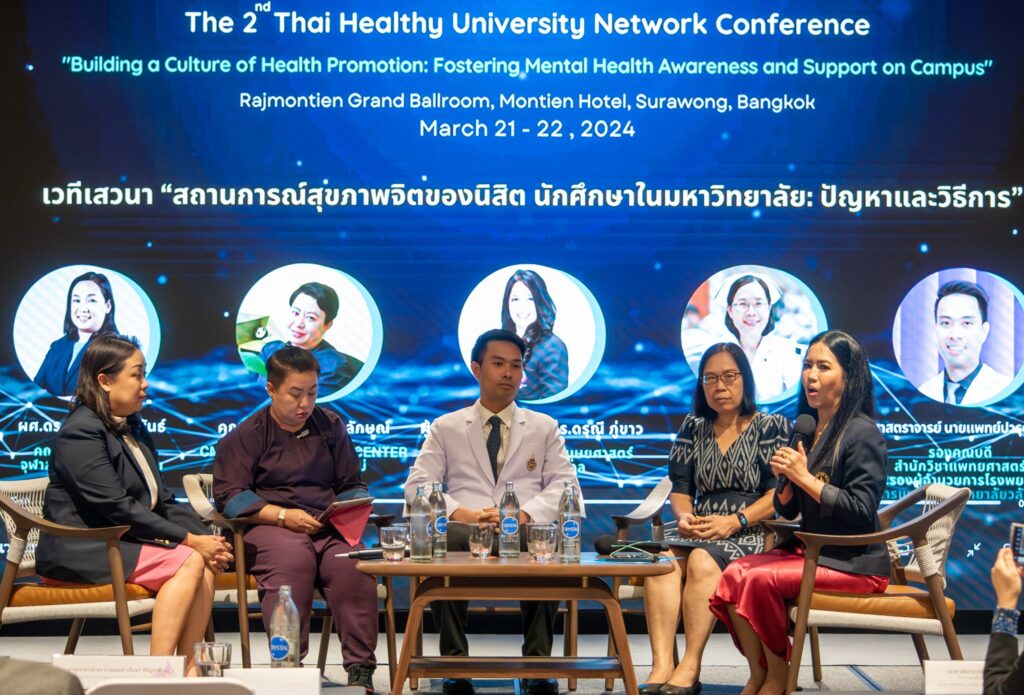
Mahidol University and Chulalongkorn University have scheduled the 2nd National Conference on Health Promoting Universities, to be held from March 21-22, 2024, at the Montien Hotel, Surawong, Bangkok. Universities are invited to participate by setting up exhibition booths showcasing their health promotion achievements, with a focus on mental health.
The Faculty of Medicine at Burapha University will present the exhibition titled Mindful Wellness: Fostering Mental Wellbeing, featuring research under the theme Building a Health Promotion Culture: Raising Awareness of Mental Health and Institutional Support. The delegation from Burapha University, led by Associate Professor Dr. Watcharin Kasalak, President of Burapha University, along with the Dean of the Faculty of Medicine and staff from the Student Affairs Division, will participate in this event.
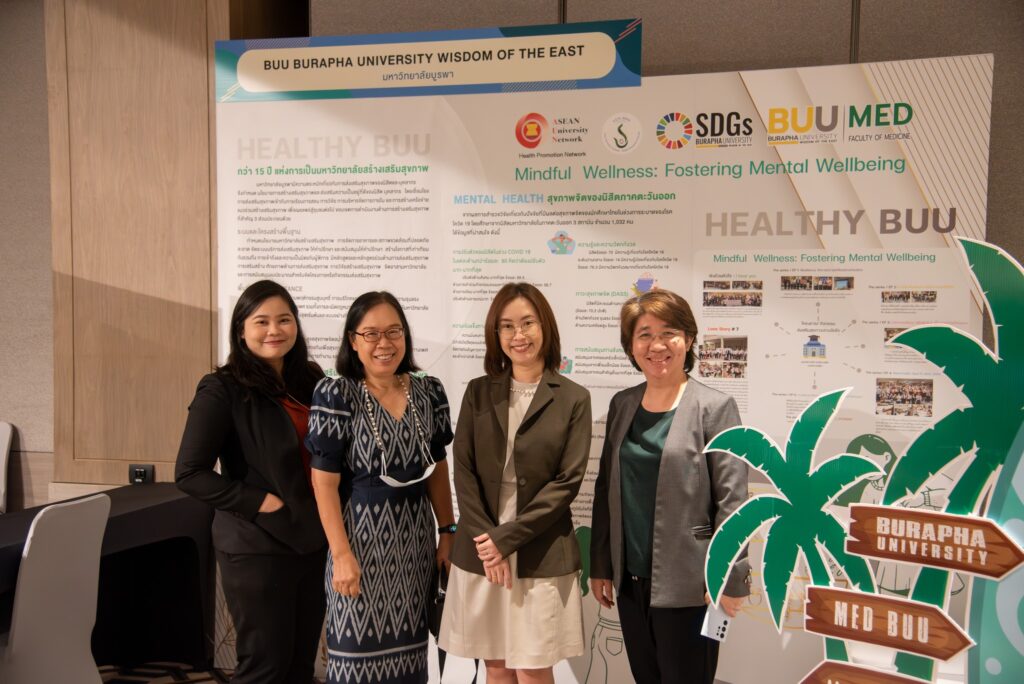
1. Burapha University has created an environment that supports health activities, offering shared spaces for both university members and the surrounding community. These include recreational parks, sports areas, fitness centers from the Faculty of Sports Science, and health counseling centers, both centrally (Student Affairs Division) and within individual faculties.
2. There are clear policies and committees dedicated to promoting health initiatives, which are communicated to all faculties through formal circular letters.
3. Various integrated activities have been carried out continuously, demonstrating sustainability in raising mental health awareness. For example, the Love Story Project, which has been running for 7 years, and the Life and Mental Skills Development Group (The Series), which integrates various formats and provides students with continuous access to these activities.
Opportunity for Improvement in Mental Health
Policy Level: University administrators should actively implement policies related to providing effective mental health support systems for students. The process and structure of student care should be fully developed in all aspects as follows:
1. Budgetary Support: Continuous and systematic funding is necessary, such as integrating it into the university’s plans or assigning responsibility to a Vice President. This would greatly enhance initiatives like mental health workshops that provide students with knowledge and psychological skills to strengthen their mental resilience, contributing significantly to their overall well-being.
2. Student Health Data System: A system should be designed to record comprehensive student health data, including both physical and mental health, to create a database that can support activities tailored to individual student needs. Currently, not all faculties have this system. Advisors should maintain records of the students they oversee, conduct annual screenings, and meet with students to assess risks. If problems are detected, students should be referred to the counseling center so that data can be collected for designing targeted preventive and supportive activities.
3. Leadership Engagement: There should be continuous platforms or opportunities (such as “Leadership Walk to Talk”) for university leaders to engage with students directly, fostering closeness and trust. This would encourage students to openly share their problems or seek help in a timely manner.
4. Incident Reporting System: A system for reporting incidents, such as self-harm cases, should be developed. In the past, there have been two off-campus incidents involving university students, but no primary authority is currently responsible for gathering this data. Collecting information from media or other sources would allow for more diversified planning and preventive activities.
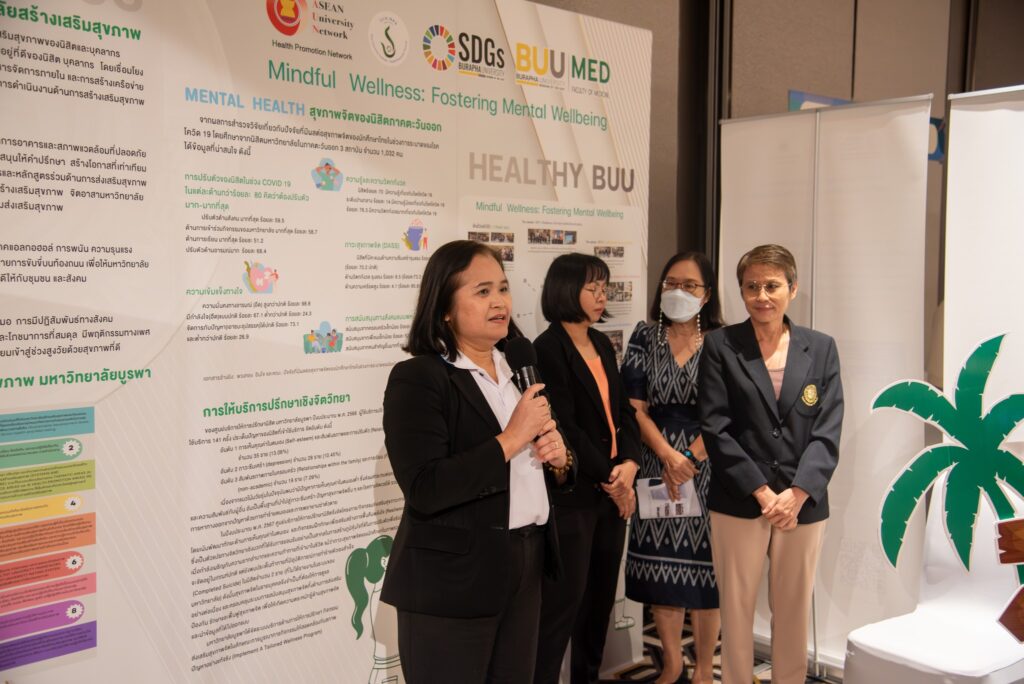

Project Leader: Ms. Kamonwan Palug, Faculty of Medicine