
The Humane Spirit of Animal Science for Social Development 2025, Session 1
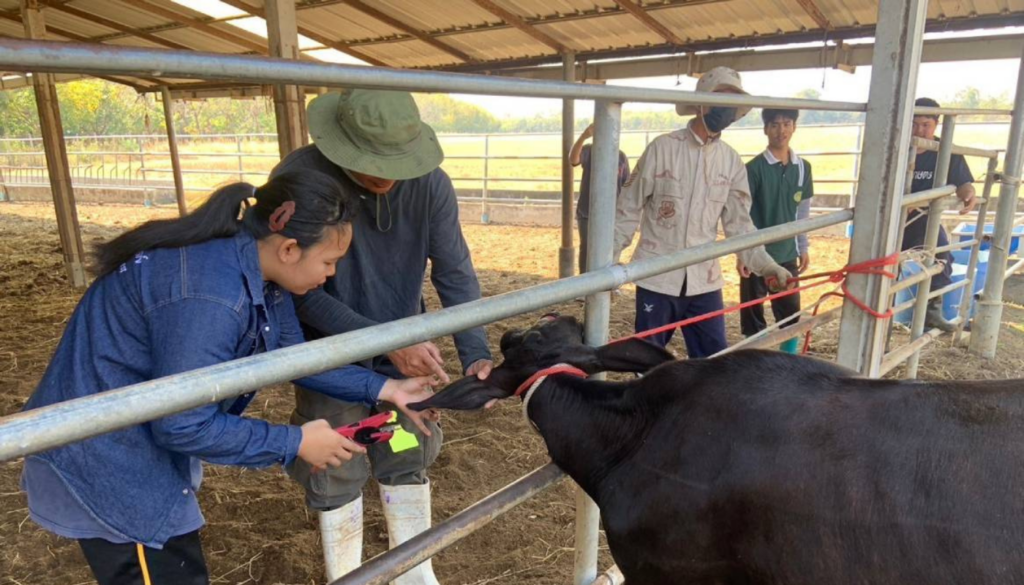
Active learning is a teaching and learning process emphasizing student engagement and interaction through diverse hands-on activities. Learners acquire knowledge from activities or real-life experiences, which leads to developing analytical thinking, problem-solving, and decision-making skills. The Animal Production Innovation group from the Agricultural Innovation Curriculum, Faculty of Agricultural Technology, Burapha University, Sa Kaeo Campus, recognizes the importance of lifelong learning through activities. In alignment with the faculty’s policy to engage with local livestock farming communities near the campus—which raises various economic animals such as beef cattle, dairy cows, goats, and sheep—this project also serves to publicize the faculty’s missions and activities. Thus, the Faculty of Agricultural Technology has initiated this project to promote outdoor education, allowing students to integrate practical training in real-world environments, collaborate with district livestock officers and local farming communities, and foster a sense of responsibility toward society and local communities. The project also aims to instil pride in the animal science profession by applying classroom knowledge to volunteer activities that benefit society and communities. It enhances connections among farmers, communities, livestock officers, the Faculty of Agricultural Technology, and young people who will continue the livestock profession in the future.
This project was combined with 3 objectives. Therefore,
Firstly, To provide livestock farming communities with academic consultation on farm management and access to animal healthcare services, such as medicines and vaccines, in collaboration with the Department of Livestock Development and the Faculty of Agricultural Technology, aligning with Sustainable Development Goal (SDG)
Secondly, To create opportunities for students from the Faculty of Agricultural Technology to apply classroom knowledge, gain hands-on experience, and work directly with farmers in real-world environments, engaging in sustainable community and social volunteer activities.
The last objective is to deliver academic services to the community as part of the university’s mission.
Faculty members of the Faculty of Agricultural Technology guide first- and second-year students in the Animal Production Innovation group to engage in outdoor practical work with district livestock officers and local farmers. Activities include administering medicine to beef cattle and offering academic consultations on farm management and animal health (e.g., vitamins, medications, ear tagging, and vaccinations). The project, as part of the “Humane Spirit of Animal Science for Social Development 2025, Session 1,” adopts active learning principles, emphasizing interactive participation and diverse hands-on activities. This allows students to acquire knowledge through real-life experiences, enhancing skills in analytical thinking, problem-solving, and decision-making.
The impact of this project led students to develop practical skills in animal science and cultivate a sense of volunteerism while working for the betterment of society. They also gain teamwork skills. The Faculty of Agricultural Technology, Burapha University, has become better recognized within the community and society. Students are encouraged to take social responsibility and take pride in their animal science profession by applying classroom knowledge to sustainable volunteer activities. Positive relationships are fostered among farmers, communities, livestock officers, the Faculty of Agricultural Technology, Burapha University (Sa Kaeo Campus), and young people aspiring to continue in the livestock profession. These align with the goals of sustainable development.
Project Leader: Asst. Prof. Dr. Supreena Srisaikham, Faculty of Agricultural Technology