
Local economy promotion of sustainable agriculture - community enterprise network in Tambol Na Jomtien, Sattahip District, Chonburi Province through the integration of smart agriculture, value-added agriculture, and gastronomy tourism
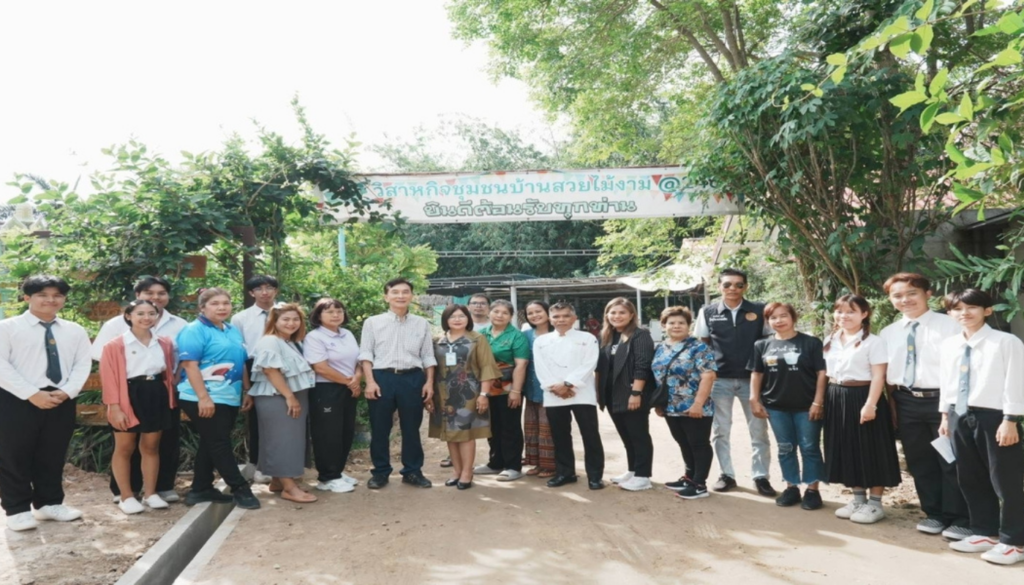
The project supports Thailand’s 20-Year National Strategy (2018–2037) by enhancing the competitiveness of community enterprises through sustainable and innovative practices. It focuses on transforming traditional farmers into innovative agricultural entrepreneurs by integrating technology to add value and reduce production costs. Located in Najomtien, Chonburi, the Ban Suayngam@2465 Community Enterprise promotes organic farming and safe agricultural practices. The project also integrates agriculture with food tourism by utilizing local resources to develop activities and products aligned with the BCG (Bio-Circular-Green) Economy model. This initiative fosters economic growth, sustainable resource use, and social empowerment while creating opportunities for the community through innovation and tourism.
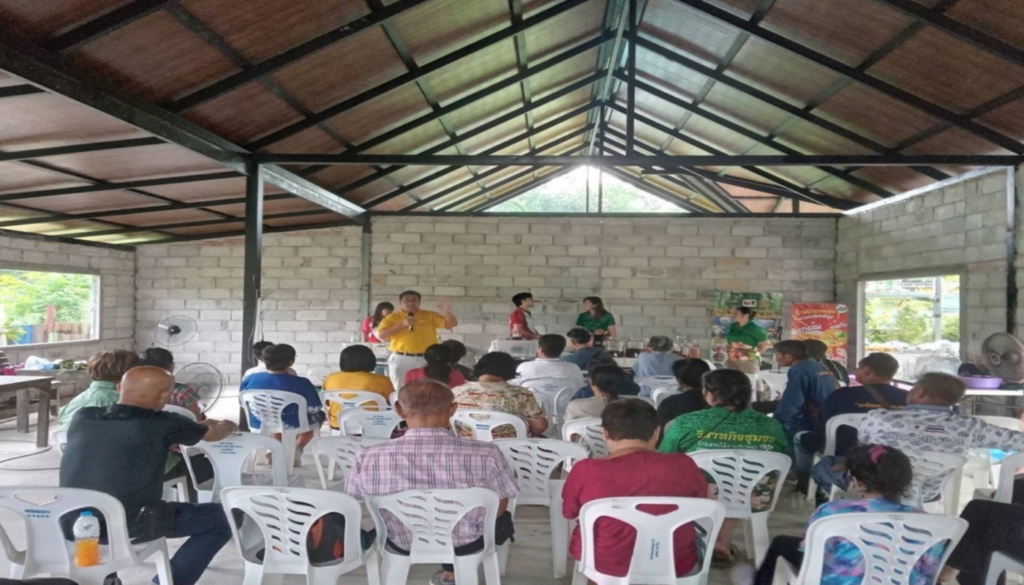
This project was combined with 3 objectives as follows,
1. To develop the process of growing mushrooms and salads using smart farming technology to control the water system and monitor environmental conditions, resulting in reduced production costs through decreased reliance on human labour and more efficient water usage in farming.
2. To develop a safe and refined farming system that increases the value of agricultural products in the community by utilizing pure water and establishing product standards.
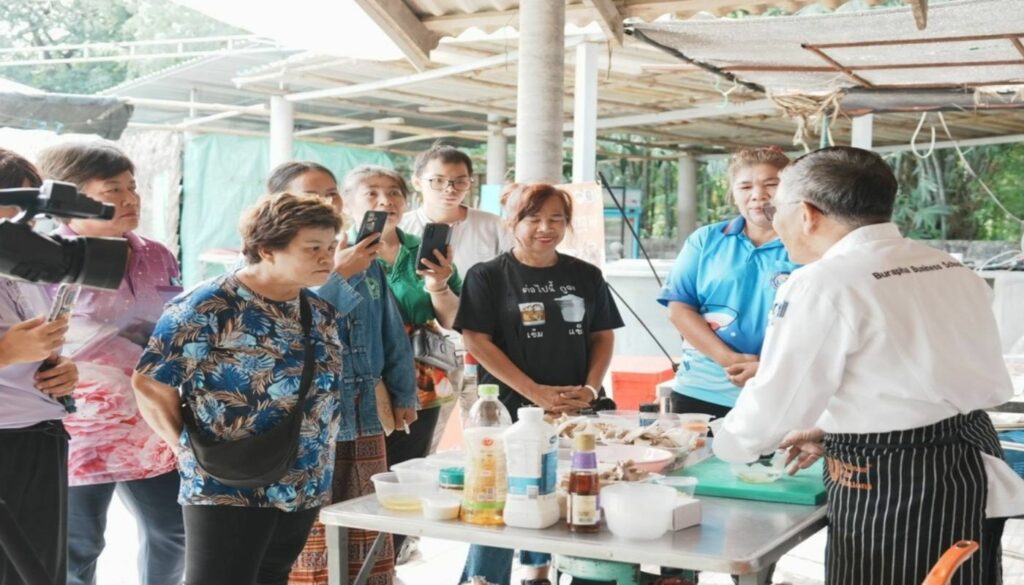
3. To promote and transfer knowledge on enhancing food menus with local ingredients and improving the art of food presentation to support gastronomy tourism.
The project focuses on developing innovative agricultural technology for mushroom and lettuce cultivation and enhancing safe and precise agricultural systems to add value to agricultural products. Activities include engaging with the community to identify challenges and planning and implementing automated systems and water purification technologies. Community members are trained in water quality analysis and contamination-free cultivation techniques for lettuce and mushrooms: data collection, lab analysis, and results presentation further support process improvements and technology transfer. Additionally, the project promotes local food products and food tourism by collaborating with community enterprises, conducting interviews, and designing food tourism activities. Workshops on local food development, culinary presentations, and preparation for tourism activities were conducted. The project evaluates the impact through satisfaction surveys and compiles findings into a comprehensive report. This initiative fosters innovation, empowers the community, and boosts sustainable food tourism.
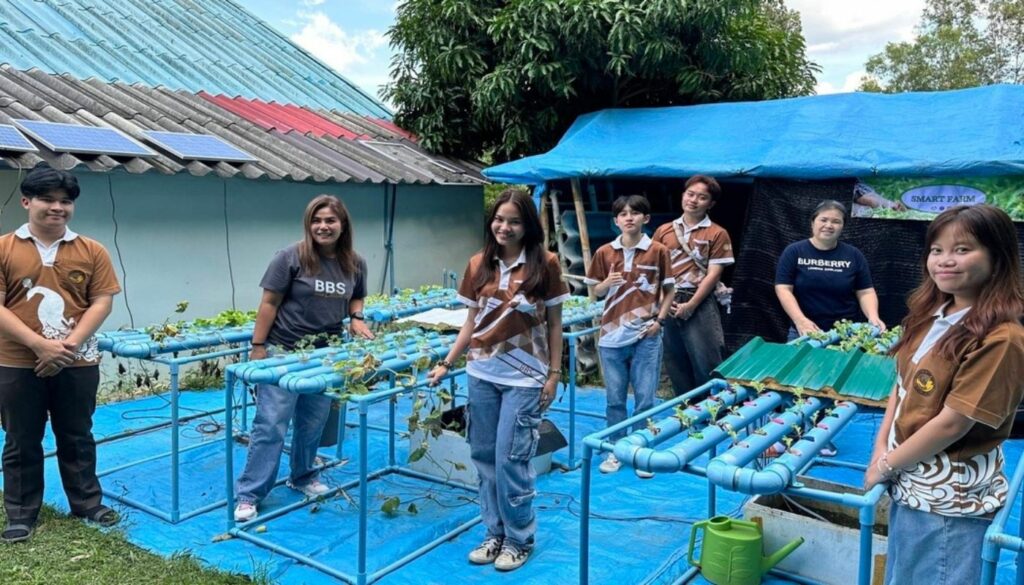
This project promotes active learning by engaging students in hands-on, problem-solving activities within local communities. It integrates academic knowledge with real-world applications, fosters social responsibility, and strengthens collaboration between universities and communities. Students gain practical skills, while communities benefit from research and sustainable development efforts, creating a mutually beneficial relationship. Also, this project provides the community with tools and knowledge for sustainable development, improving their economic well-being, social cohesion, and environmental conservation while promoting local identity and tourism.
Project Leaders: Assistant Professor Chitlada Pinthong and Assistant Professor Salil Chanroj,
Burapha Business School and Faculty of Science