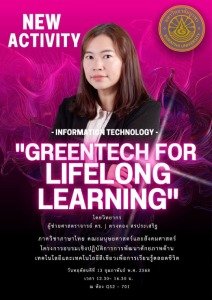
Workshop on Technological and Information Competency Development: "GreenTech for Lifelong Learning"
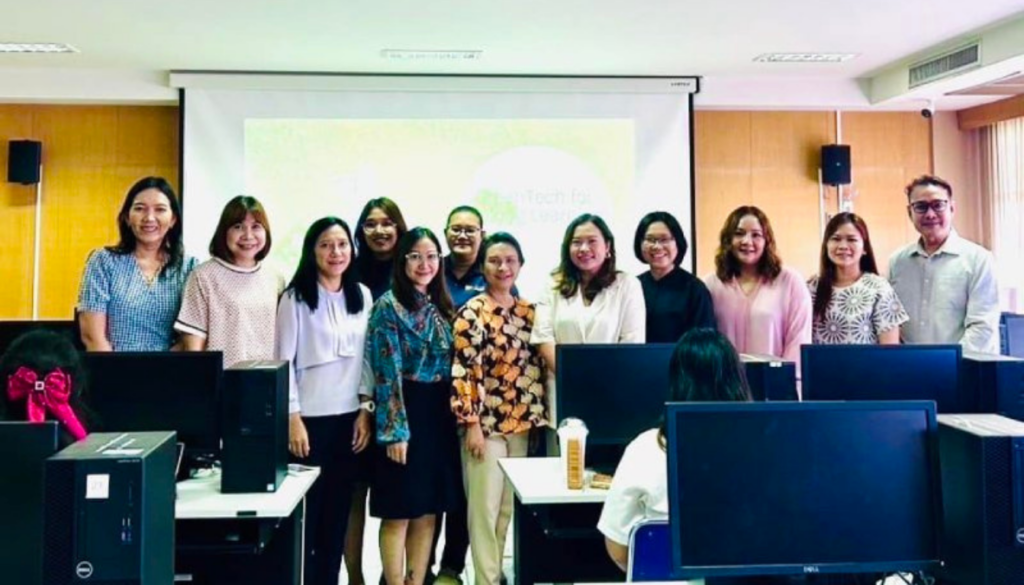
The Department of Thai Language, Faculty of Humanities and Social Sciences, recognizes the importance of equipping students with competencies and skills essential for the 21st century, particularly in information, media, and technology literacy (Digital Literacy). These include the ability to use digital tools effectively, safely manage digital information, reduce wasteful material usage, and apply digital literacy skills in both professional and personal contexts to keep pace with a rapidly evolving world and promote lifelong learning.
To support this mission, the department organized a hands-on workshop titled “GreenTech for Lifelong Learning”, aimed at preparing third-year Thai Language students for professional internships. The workshop was honored to have Asst. Prof. Dr. Tuangtong Soraprasert, an expert in information and technology, a writer, translator, and chief editor of a publishing house and magazine, as the guest speaker.
The project’s objectives were composed of six objectives
1. To develop technological and informational competencies for third-year Thai Language students.
2. To prepare students for internships at various public and private sector organizations.
3. To support the faculty’s mission and objectives.
3.1 To equip students with 21st-century skills, especially in digital literacy and effective use of digital tools.
3.2 To enable students to adapt digital literacy knowledge to the evolving global context and lifelong learning.
3.3 To promote environmentally friendly technologies that enhance efficiency and conserve resources, aligning with the Green University policy.
Implementation of this project has a total of four steps
1. Planning Phase:
1.1 Organizing committee meetings for planning.
1.2 Drafting and obtaining approval for the project.
2. Implementation Phase:
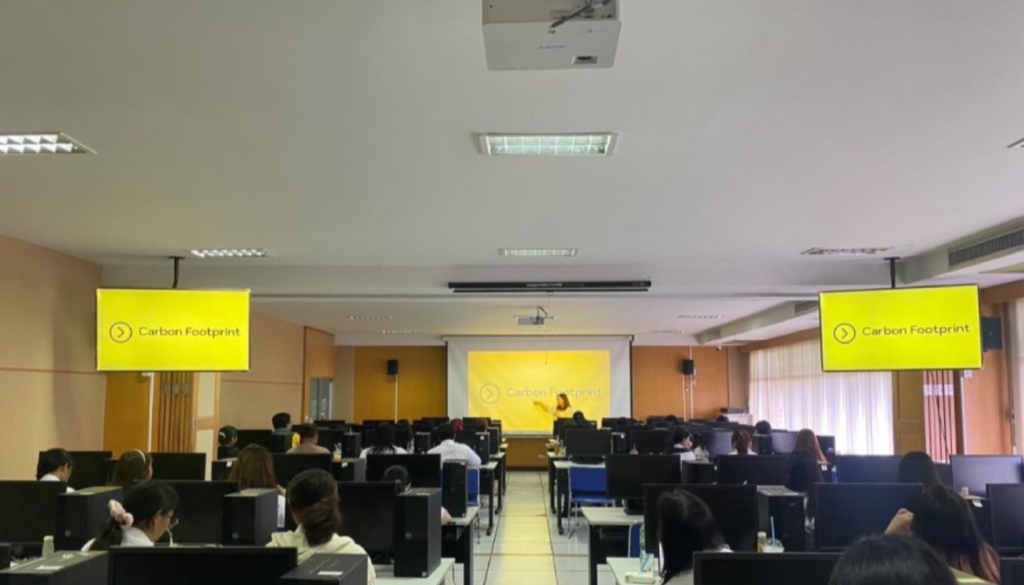
2.1 Conducting the workshop with 59 third-year students participating.
2.2 Activities included both lectures and practical training.
3. Evaluation Phase:
3.1 Summarizing and assessing outcomes.
4. Improvement Phase:
4.1 Preparing a final report and using feedback for future project development.
The impact of this project is that students gained knowledge in using technology for learning, working, and daily life. They became aware of environmental conservation and the importance of sustainability at the personal, business, and community levels. They learned about green technology fundamentals, understood the impact of global warming and resource overuse, and explored global solutions and initiatives such as:
- Smart Energy: e.g., Huawei Smart Charger
- Green Buildings: eco-friendly construction
- Digital Sustainability: reducing digital pollution
- Circular Economy: e.g., design for recycling and reuse
Additionally, students practiced using the National Industrial Symbiosis Programme (NISP), a tool that facilitates material, energy, and water exchange between industries to reduce waste and improve resource efficiency. The workshop helped students explore ways to use technology for lifelong learning and minimize environmental impact.
Project Leader: Asst. Prof. Nattha Khamchoo & Miss Chuthamat Srirasa, Faculty of Humanities and Social Sciences