Cargill Cares 2025: Safe Rice Cultivation, A Testament to Cargill’s Care
Cargill Cares: Promoting Safe Rice Cultivation with a Commitment to Sustainability
Cargill Meats (Thailand) Co., Ltd. has supported the implementation of the Cargill Cares project titled “Promoting Safe Rice Cultivation:
A Commitment from Cargill”, aiming to raise awareness among rice farmers living near its factory about the use of technology and innovation in sustainable rice farming. The initiative emphasizes safe agricultural practices, efficient use of natural resources, and the advancement of sustainable agriculture.
This project is a collaborative effort between Burapha University (Sakaeo Campus), Suranaree University of Technology, and Cargill Meats (Thailand) Co., Ltd., and is being implemented in fiscal year 2025 (B.E. 2568). It focuses on enhancing rice cultivation knowledge, especially in managing soil, water, and fertilizer to benefit both communities and the environment. The project also aims to introduce farmers to new knowledge such as cost evaluation in rice farming, along with hands-on learning through demonstration plots, enabling participants to gain practical experience, develop observational and analytical skills, and deepen their understanding.
Project Objectives: 1. To equip participants with knowledge on safe rice cultivation practices.
2. To enhance participants’ understanding of soil, water, and fertilizer management that benefits the community and environment, as well as to introduce cost assessment in rice farming.
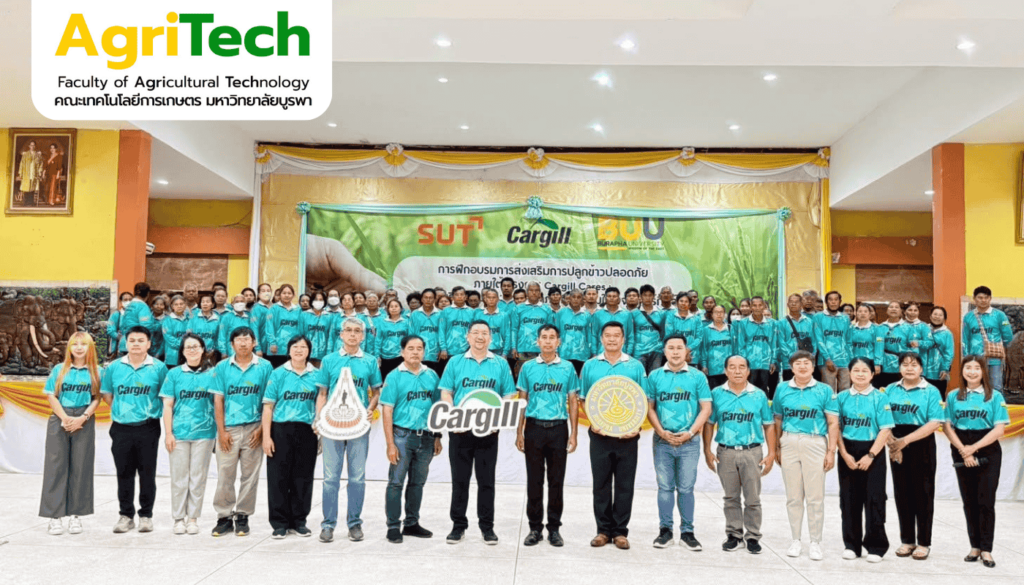
Now in its fourth consecutive year, the Cargill Cares project continues to provide agricultural knowledge and technology to farmers in Chok Chai District, Nakhon Ratchasima Province, reaching 104 farming households.
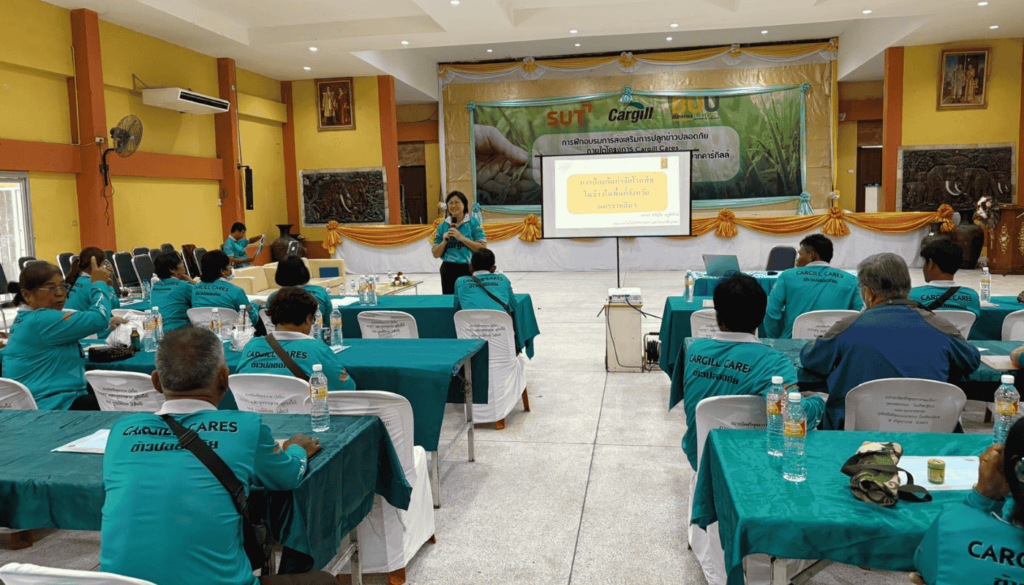
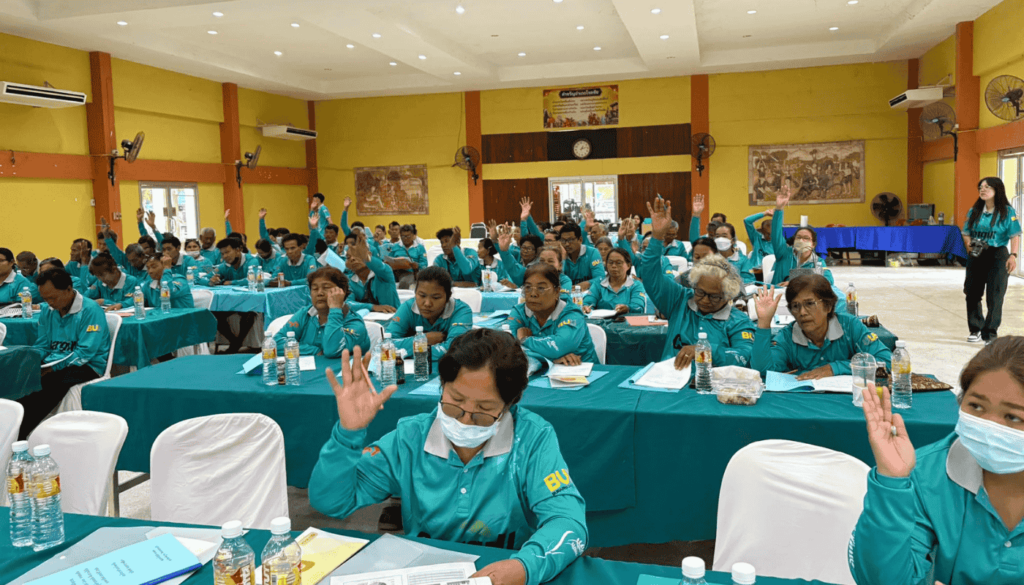
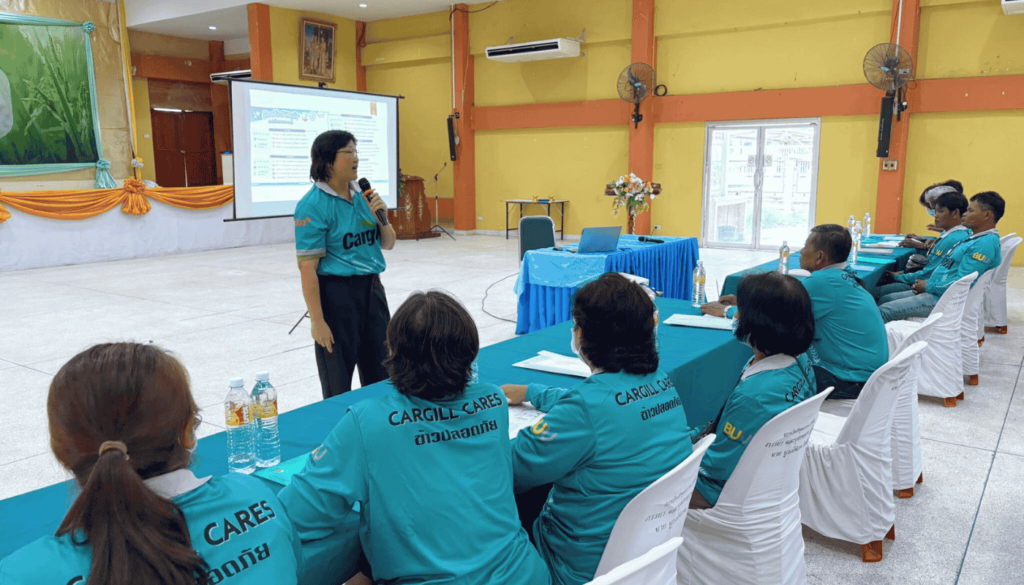
The training session took place on April 29, 2025, at the Chok Chai District Hall. It was led by faculty members from the Faculty of Agricultural Technology, Burapha University (Sakaeo Campus), covering key topics including safe rice cultivation techniques, effective resource management, and cost analysis in rice farming.
Impacts of the Project: All 104 participating farmers gained valuable knowledge in safe rice production, resource management, and cost evaluation.
Farmers applied this knowledge and technology to achieve increased yields of safe rice.
The adoption of innovative techniques led to higher income for farmers, driven by improved rice productivity and quality.
This initiative demonstrates a strong commitment to sustainable agriculture, community development, and knowledge transfer—paving the way for a better future for local rice farmers.
Project leader: Asst. Prof. Dr. Supreena srisaikam, Faculty of Agricultural Technology