
Seminar on Creative Repurposing of Gemstone Remnants for Enhanced Jewellry Value
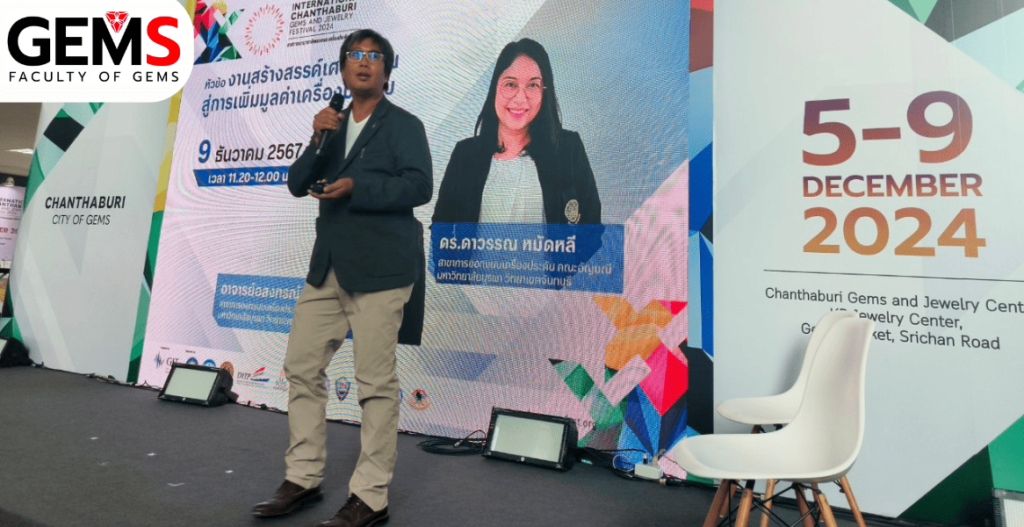
During the International Chanthaburi Gems and Jewellery Festival 2024, a seminar highlighted the “Creative Repurposing of Gemstone Remnants for Enhanced Jewellery Value.” Led by Alongkorn Pamounsab of Burapha University, the lecture addressed the standard practice in Chanthaburi’s gem industry of retaining manufacturing byproducts, or gemstone remnants, often due to cultural beliefs and anticipated future value. The seminar aimed to present research findings on transforming these remnants into valuable jewellery, offering local entrepreneurs a way to increase profitability and drive design innovation.
The objectives were to share research on enhancing the value of gemstone remnants in Chanthaburi’s jewellery industry, enabling entrepreneurs to profit from byproducts and foster design innovation. It also aimed to reconcile cultural beliefs about these remnants with business practices for sustainable growth.
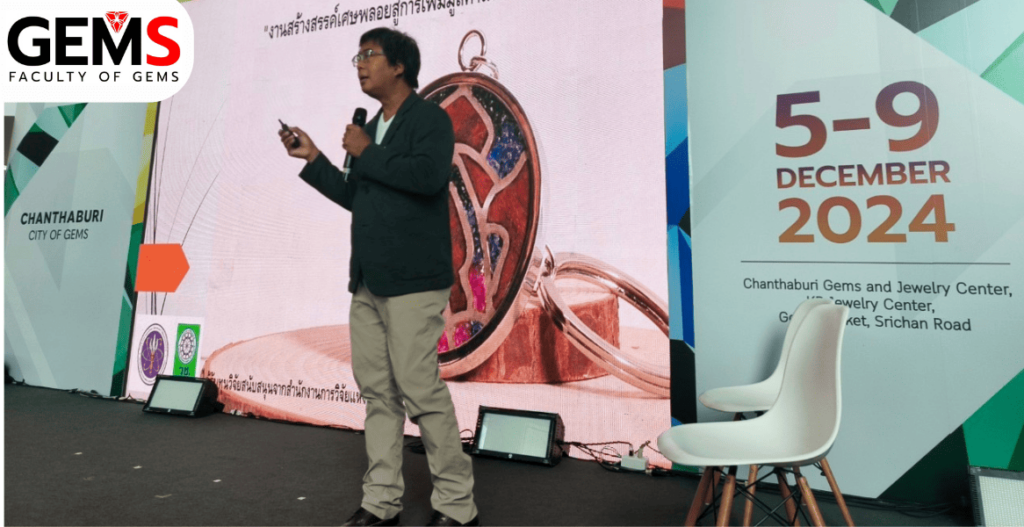
The lecture presented findings from research focused on adding value to gemstone remnants or lower-grade gemstones within the gem and jewellery industry of Chanthaburi Province. These remnants are typically byproducts of manufacturing processes. Furthermore, gemstone remnants hold cultural and religious significance, often regarded as sacred objects, leading to a belief that their disposal could bring misfortune. Consequently, gem entrepreneurs in Chanthaburi tend to retain these remnants, anticipating potential future value. The application of research outcomes offers a pathway to enhance the value of these remnants through their incorporation into jewellery design. This integration necessitates careful consideration of design adaptation, material placement, and production space management within the design process.
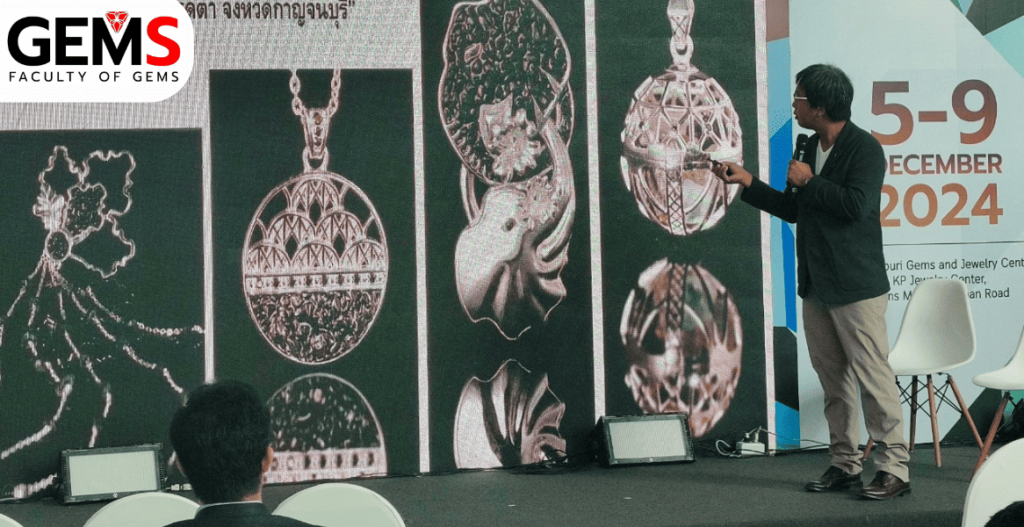
The dissemination of this knowledge offers several key benefits. Firstly, it creates added value from manufacturing byproducts within the gem and jewellery sector. By applying research insights on utilising gemstone remnants in jewellery design, entrepreneurs can transform what might be considered valueless waste into high-value, profitable products. Secondly, it fosters creativity and innovation in design. The lecture underscored the importance of modifying forms, arranging materials, and managing production space as critical factors for effectively using gemstone remnants in jewellery design. This knowledge is expected to stimulate novel ideas among entrepreneurs for creating distinctive and appealing products. Moreover, the seminar addresses local beliefs and cultural practices associated with gemstone remnants as revered objects that should not be discarded. Presenting methods for enhancing their value offers a reconciliation between traditional beliefs and business development, allowing entrepreneurs to manage these remnants appropriately while generating economic benefits. Overall, this seminar was a significant platform for translating research knowledge into practical application. It aims to empower gem and jewellery entrepreneurs in Chanthaburi Province to enhance their competitiveness, create new products from existing byproducts, and drive sustainable growth within the industry.
Project Leader: Lecturer Alongkorn Pamounsab, Faculty of Gems