
Seminar on Precious Sterling Silver
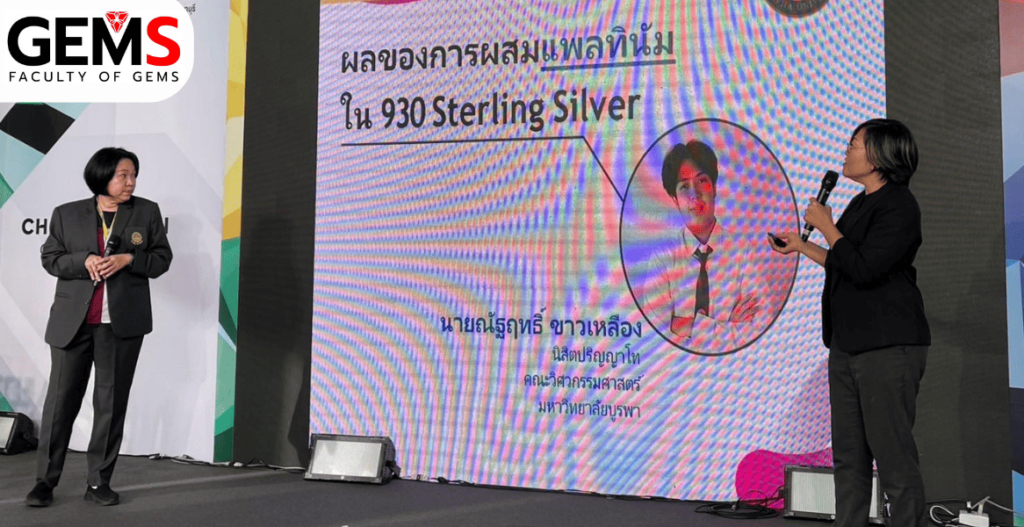
The gem and jewellery industry, particularly in Chanthaburi Province, Thailand, relies heavily on precious metals, such as silver. Associate Professor Dr. Saisamorn Niyomsoan’s lecture (faculty member of the Gem and Jewellery Technology Department, Faculty of Gems, Burapha University, Chanthaburi Campus) at the International Chanthaburi Gems and Jewellery Festival 2024 addressed the critical need for research-based knowledge to enhance this industry. Recognising silver’s significant role alongside white gold and platinum, her presentation focused on the properties of 930 sterling silver and the potential improvements achievable through alloying with platinum. This research is driven by the desire to optimise jewellery production processes, develop higher-quality silver alloys with enhanced properties such as tarnish resistance and hardness, and ultimately boost the competitiveness of local entrepreneurs in both domestic and international markets.
The central objectives of this research and its dissemination were to provide the gem and jewellery sector with crucial insights into precious metals, with a specific focus on advancing silver alloys for jewellery production. This involved a detailed investigation into how adding platinum to 930 sterling silver alters its key characteristics, including surface quality, resistance to tarnish, hardness, and internal structure. The ultimate aim was to equip entrepreneurs with evidence-based guidelines to optimise their production methods, craft superior and more valuable silver jewellery, and thereby strengthen their position in both local and global markets.
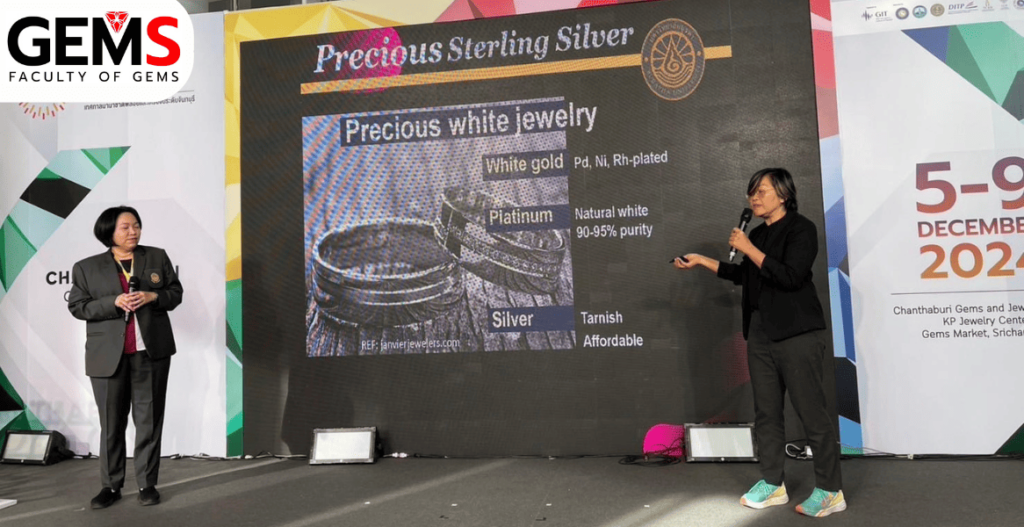
The presentation outlined the hierarchy of value among precious white jewellery metals, namely White Gold, Platinum, and Silver. The core of the lecture centred on presenting research findings that investigated the effects of adding platinum to 930 sterling silver. This study aimed to test and analyse the resulting changes in the properties of this new alloy. Key aspects covered included the properties and composition of 930 sterling silver, the outcomes of casting jewellery mountings, alterations in the surface finish before and after polishing, tarnish resistance testing, hardness testing, microstructural changes resulting from the addition of platinum, and various factors influencing the precious metal manufacturing process. The knowledge and research outcomes presented in this lecture aim to provide a guideline for improving and developing new metals for jewellery production within the gem and jewellery industry.
This lecture proved beneficial to entrepreneurs and seminar attendees as it directly presented research-based knowledge concerning silver, a significant material in the gem and jewellery industry of Chanthaburi Province. Gaining in-depth knowledge about the properties of sterling silver, as well as the results of developing a new alloy through the addition of platinum, will enable entrepreneurs to apply this expertise to refine their production processes and develop higher-quality, more valuable silver jewellery products. Furthermore, understanding the various factors affecting precious metal manufacturing will lead to increased competitiveness in both domestic and international markets.
Project Leader: Assoc. Prof. Dr. Saisamorn Niyomsoan, Faculty of Gems