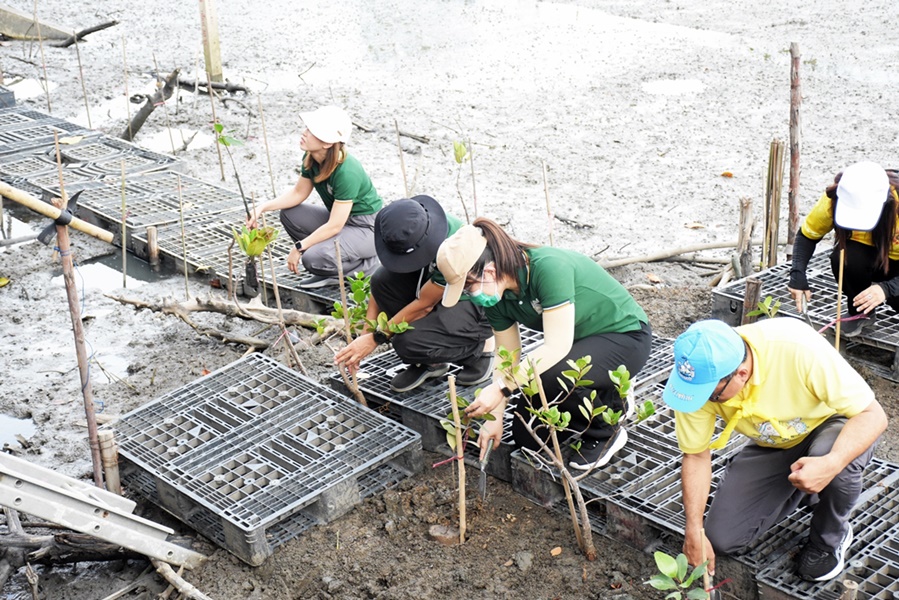
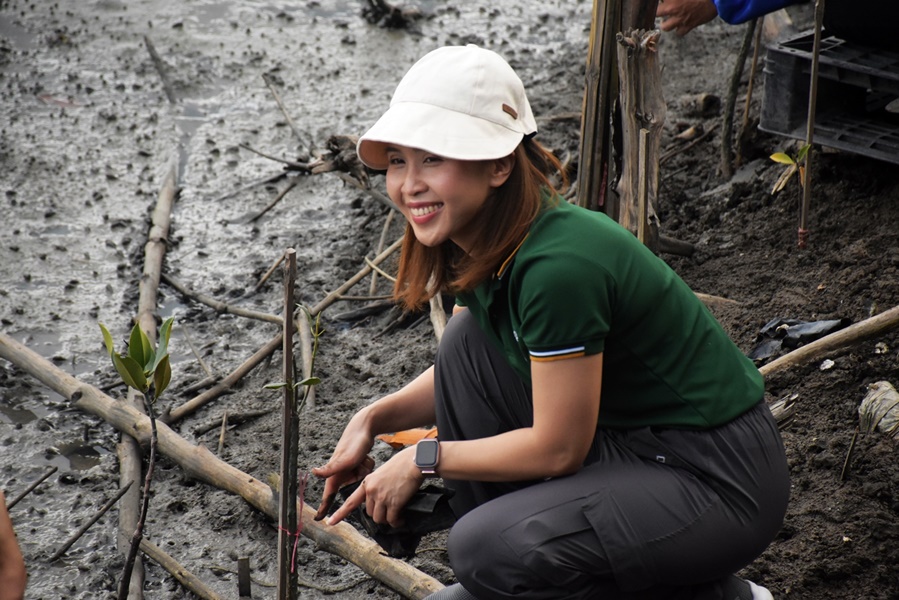
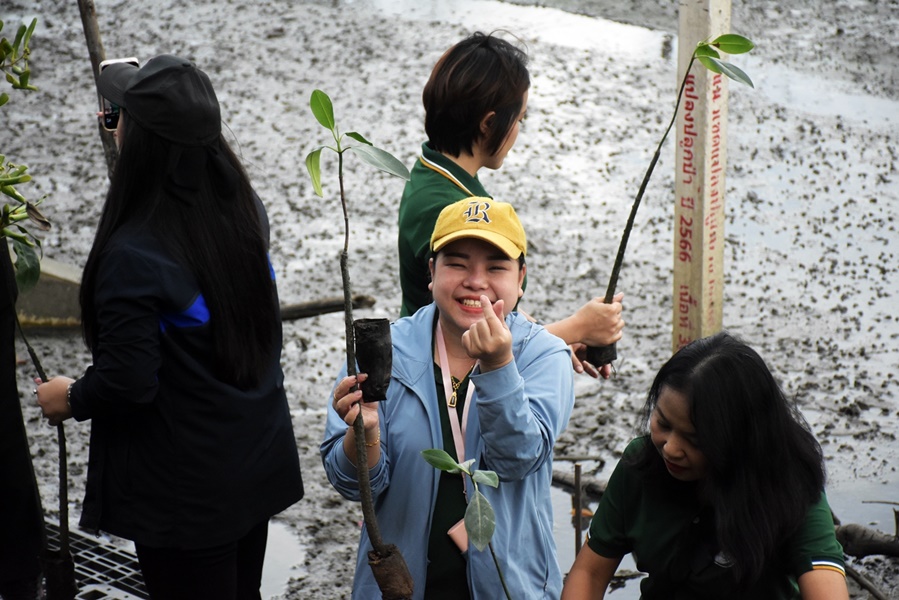
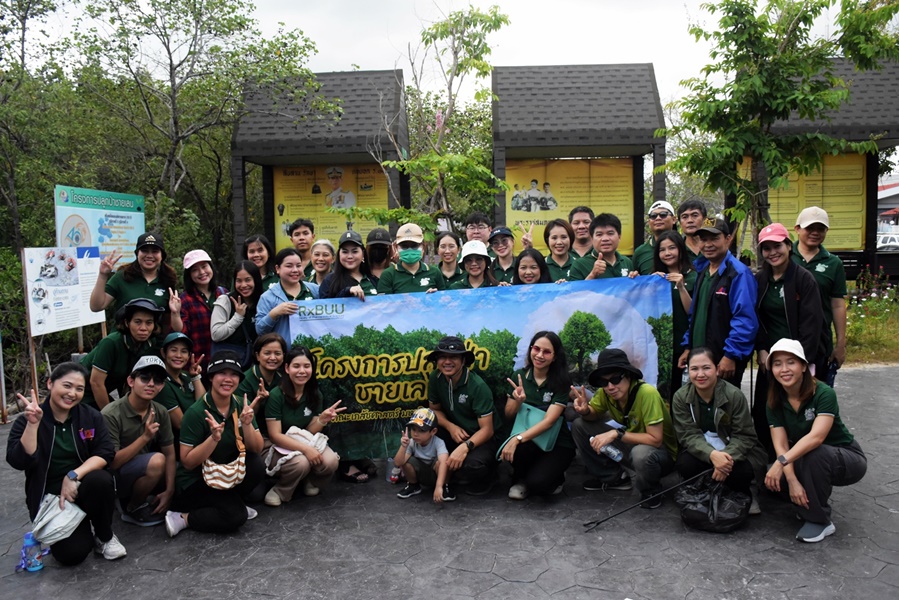
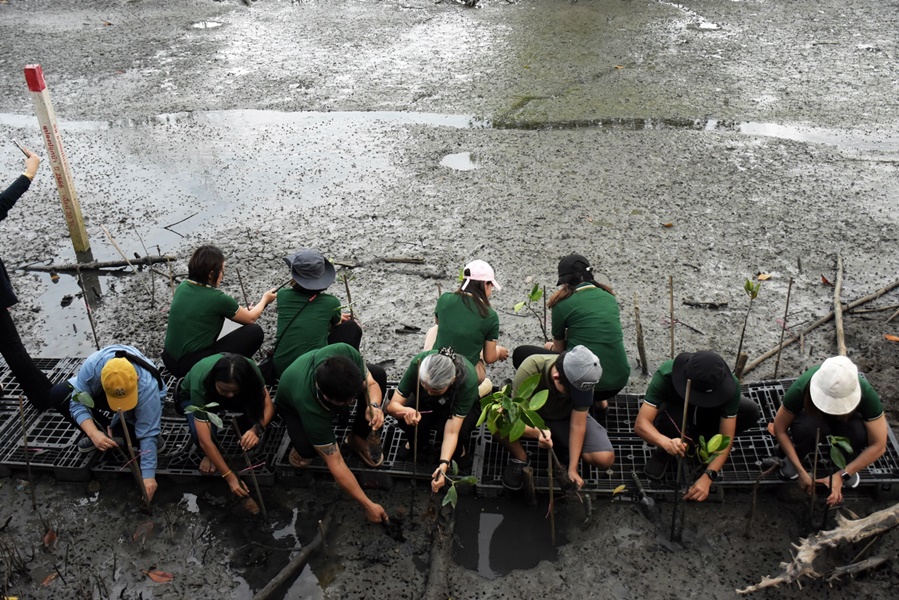
The Faculty of Pharmacy acknowledges the significance of Chonburi Province, where the university is situated, as a region with over 40,000 rai (approximately 15,800 acres) of mangrove forests—an invaluable natural resource for flora, fauna, and humans in terms of economy, society, and the environment. These mangroves serve as breeding grounds for economically significant marine life such as crabs, shrimp, and shellfish, as well as sources of energy and materials (e.g., wood for construction and use). They also support eco-tourism.
Due to population growth, mangrove areas have faced increasing encroachment, posing a pressing environmental issue. As a result, the Faculty of Pharmacy has established an ongoing annual plan for mangrove reforestation. The 2025 project marks the 4th year of this effort to participate in the restoration, protection, and conservation of mangrove ecosystems in alignment with Thailand’s 20-Year National Strategy.
Project Objectives are shown as follows,
1. To engage personnel in caring for the natural environment.
2. To instil environmental conservation awareness and foster unity among staff.
3. To conserve natural and environmental resources, particularly mangrove forests.
4. To preserve breeding grounds and habitats for marine animals.
The Faculty of Pharmacy received generous support from the Chonburi Mangrove Resource Management Center, the Marine and Coastal Resources Office 2, and the Mangrove Conservation Division. The agencies provided mangrove saplings, including 10 red mangrove trees and 50 large-leafed Rhizophora trees, for planting in the mangrove area at the Mangrove Forest Ecotourism and Nature Education Centre, Samet Subdistrict, Mueang District, Chonburi Province. The activity also included a coastal ecosystem cleanup, focusing on removing plastic waste, such as bags and bottles.
Project impact was shown as below,
1. Carbon Sequestration: Once matured, the 10 red mangrove trees and 50 large-leafed Rhizophora trees are expected to absorb approximately 110–165 kg of carbon dioxide per year, contributing to greenhouse gas reduction.
2. Erosion Control: The roots of these mangrove trees help anchor coastal sediments, preventing erosion and maintaining shoreline stability, thus reducing damage from waves and storms.
3. Biodiversity Enhancement: Mangrove forests provide habitats for a wide range of aquatic animals and birds, including fish, shrimp, crabs, and shorebirds. This supports ecosystem richness and benefits local fishing communities.
4. Water Purification: The root systems filter toxins and sediments from water flowing into the sea, resulting in cleaner coastal waters that are more suitable for marine life.
Project Leader: Asst. Prof. Dr. Natthan Charernsriwilaiwat & Asst. Prof. Dr. Nadechanok Jiangseubchatveera