Social service provision in front of Saensuk Municipality Community
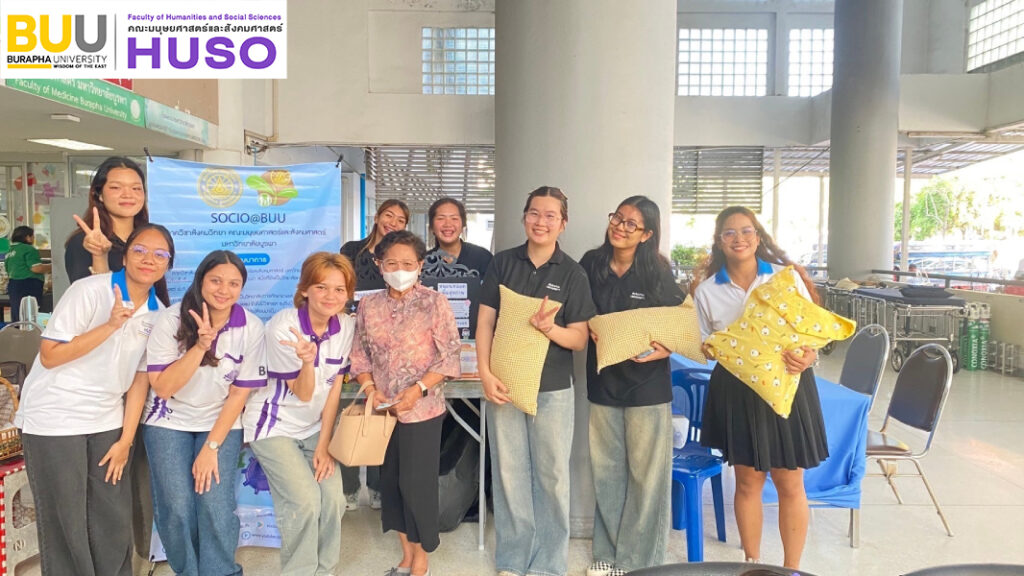
The Bachelor of Arts Program in Social Service Management, Department of Sociology, Burapha University, offers a course titled Social Service Lab, which aims to develop students’ skills in social service management and collaboration with communities surrounding the university. As part of this course, third-year students implemented a project titled “Social Service Provision for the Community in Front of Saensuk Municipality”, a community with strong potential in producing recycled-material goods. In particular, the project worked with a group of women who collaborate to create “straw pillows” as a source of income. The project focused on logo design, online media promotion, and organising a sales booth to build a unique identity, add value, and expand the market for the community’s products. This initiative aligns with the Sustainable Development Goals (SDGs), specifically: SDG 1: No Poverty, by supporting community income generation, and SDG 5: Gender Equality, by promoting women’s roles in sustainable community-level economic development.
The objective of this project is
1. To enhance the product potential of the recycled tube pillow produced by the Saensuk Municipality community, particularly women’s groups.
2. To enable sustainable income generation and market expansion (aligned with SDG 1 and SDG 5).
3. To effectively increase the publicity and visibility of community products through online media and printed materials.
4. To promote experiential learning among students by working collaboratively with the community and developing social service management skills.
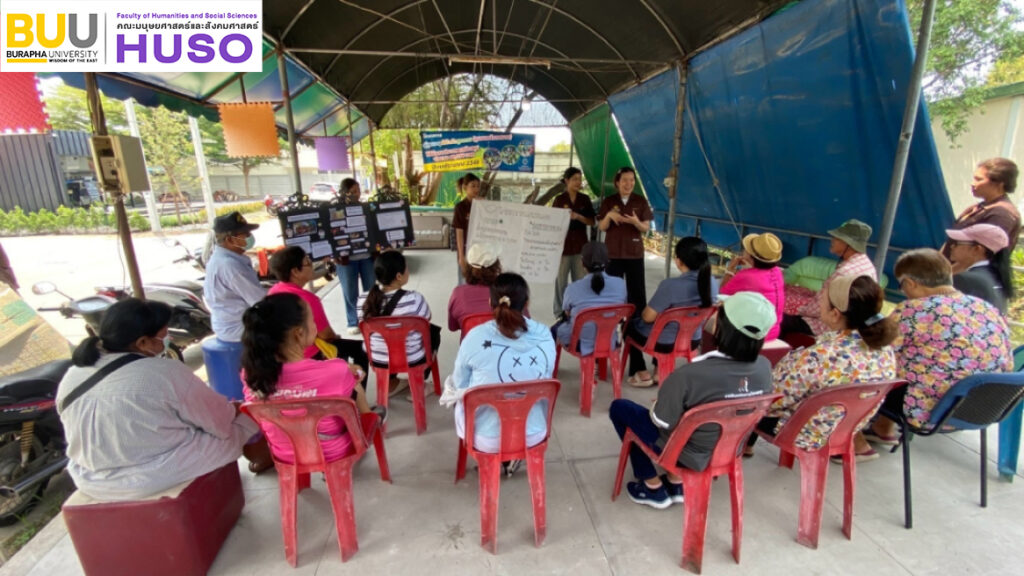
Third-year students majoring in Social Service Management, Department of Sociology, Burapha University, conducted fieldwork in the Saensuk Municipality community to gain an understanding of its context and design appropriate social services. A public forum was organised under the theme “Exploring Community Potential for Sustainable Development,” involving community members and faculty.
From this discussion, proposals emerged to develop the “tube pillow” using recycled materials as a source of supplemental income and a means to promote women’s health. Guided by this plan, the students implemented the project by designing a product logo, creating promotional media via online platforms (TikTok, Facebook), and producing printed materials.
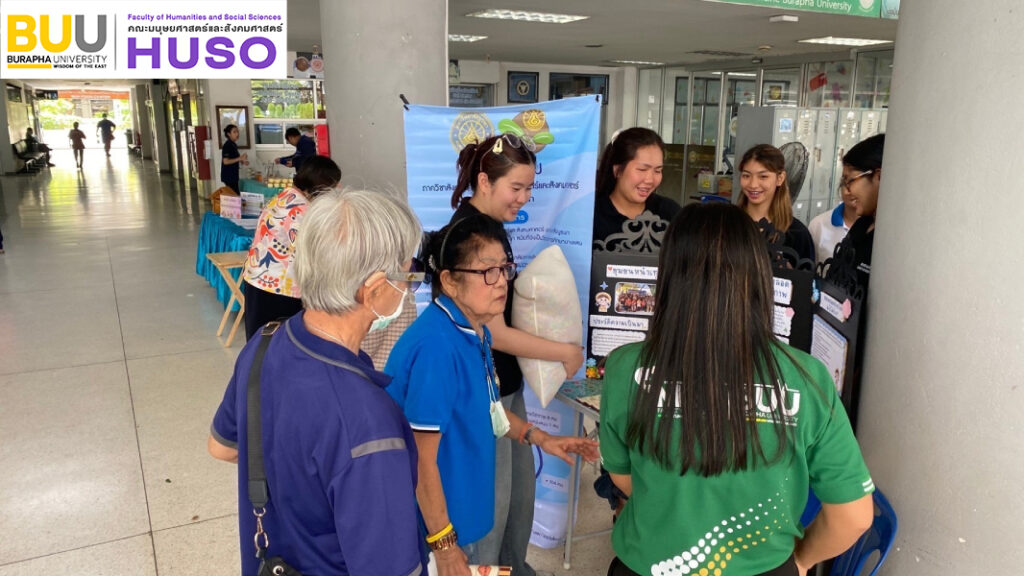
They also set up booths to showcase and sell the products both on campus and online. As a result, the “tube pillow” gained increased recognition and interest among students, university staff, and the general public, leading to significantly higher sales than before the project was introduced.
All activities were conducted with guidance and support from instructors of the Social Service Lab course, providing students with hands-on learning while advancing the Sustainable Development Goals (SDGs)—particularly SDG 1: No Poverty and SDG 5: Gender Equality.
Project impact is shown as follows,
1. The women producing tube pillows in the Saensuk Municipality community earned additional income and received support from students in promoting their products through new channels.
2. The tube pillow product was upgraded in value and developed a distinct identity aligned with modern market demands.
3. A concrete collaboration was established among the university, the local community, and local government agencies.
4. Students gained hands-on experience and improved their ability to work with communities.
5. The project reflected the university’s commitment to advancing sustainable development goals, particularly:
- SDG 1: No Poverty – by generating additional income for vulnerable groups
- SDG 5: Gender Equality – by empowering women in product development and production
Project Leader: Assoc. Prof. Suthida Changprachak, PhD, Faculty of Humanities and Social Sciences