
Brain, Mind, and Learning (BML) Student Training Program
at Elderly Club of Abhakornkiartiwong Hospital, Sattahip District, Chonburi Province :
Neuro-Linguistic Programming (NLP) To Promote Working Memory Capacity Among Elderly
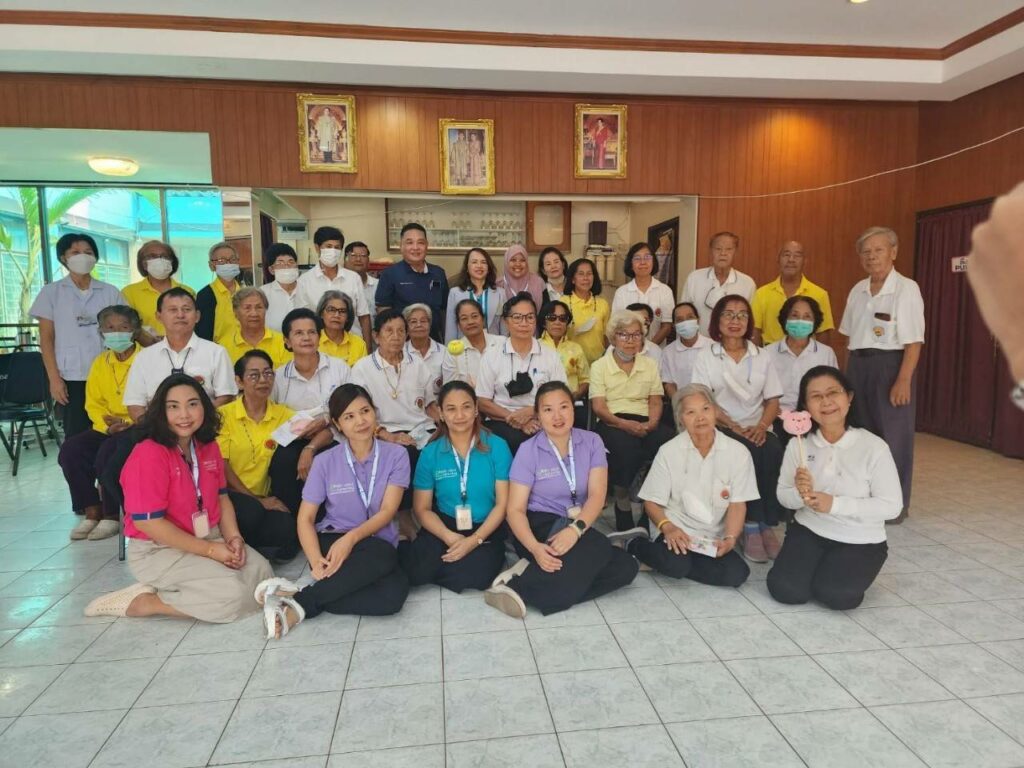
The world population has been gradually shifting toward an aged society. One in six people will be identified as elderly aged 60 years and above by 2030 with 1.4 billion aged population. These elderly will double to 2.1 billion by 2050, globally. The National Statistical Office of Thailand indicated that the country was classified as an aging society in 2005 with 10.4% of national population. In 2022, the population of Thai people older than 60 years old accounted for 19.46% which made the country to become an aged society. Thailand will expectedly shift to a ‘super-aged society’ with the 28% increase of elderly population by the next decade. Aging has been linked to the accumulative changes in biological processes over time, resulting in slow decline in physical and mental capacity as well as a growing risk of disease and eventually death. Aging also has an adverse impact on psychological, behavioral, and social functioning. Thus, the preparedness for multidimensional impacts of aging is essential for the 21st century due to the dynamic global advancement of digital technologies. The elderly aged 60 years and above must be able to adapt to these rapid changes in changing society in order to keep up with younger generations. Learning is a lifelong process of transforming information and experience into knowledge, skills, and behaviors.
Learning can considerably increase human competency and promote healthy aging among the elderly aged 60 years and above; consequently, this can lead to positive contribution to country’s healthcare systems. The promotion of cognitive health through a variety of learning activities can prevent or delay the rapid deterioration of physical, mental, and cognitive functioning; therefore, the elderly can take care of themselves, reducing caregiving responsibilities or workloads of family members. The core component of human cognitive skills is working memory. Working memory is a cognitive system that actively holds information in mind to facilitate cognitive operations. Human working memory is developed in childhood, reaches its maximum capacity in adolescence, and continuously declines with aging. The age-associated reduction of working memory capacity adds the living obstacles and diminishes happiness, creating both direct and indirect hardship among elderly aged 60 years and above. The biopsychosocial learning activities are fundamentally needed to promote working memory capacity and to enhance cognitive functioning, counteracting the detrimental impacts of aging.
Neuro-Linguistic Programming (NLP) is an integrated psychological approach that can enhance working memory by empirical evidence. Several research findings have demonstrated that NLP can increase brain executive functions, working memory, attention, and inhibitory control. For example, the application of the NLP anchoring technique can enhance attention. The application of NLP choice and positive change strategies can promote cognitive flexibility. NLP techniques, additionally, promote informational processing linked to a neural network of working memory. Thus, NLP techniques are suitable for the general learning abilities of the elderly aged 60 years and above to promote their working memory, attention, inhibitory control, and other cognitive skills, subsequently leading to an individual’s better quality of life and happiness.
Graduate students and faculty members of the Master of Science in Brain, Mind, and Learning (BML) program proposed and embarked on students’ field experience project with two main goals, including 1) students’ development to design and implement psychological strategies of BML training for individuals of all ages, and 2) the students’ application of BML learning outcomes to create new knowledge that benefits the local communities. For that reason, on 25th October 2023, BML students developed and implemented an intervention by applying Neuro-Linguistic Programming (NLP) to promote working memory capacity among the elderly at the elderly club of Abhakornkiartiwong Hospital, Sattahip District, Chonburi Province, Thailand as well as to promote the overall cognitive functioning among elderly in this local community.
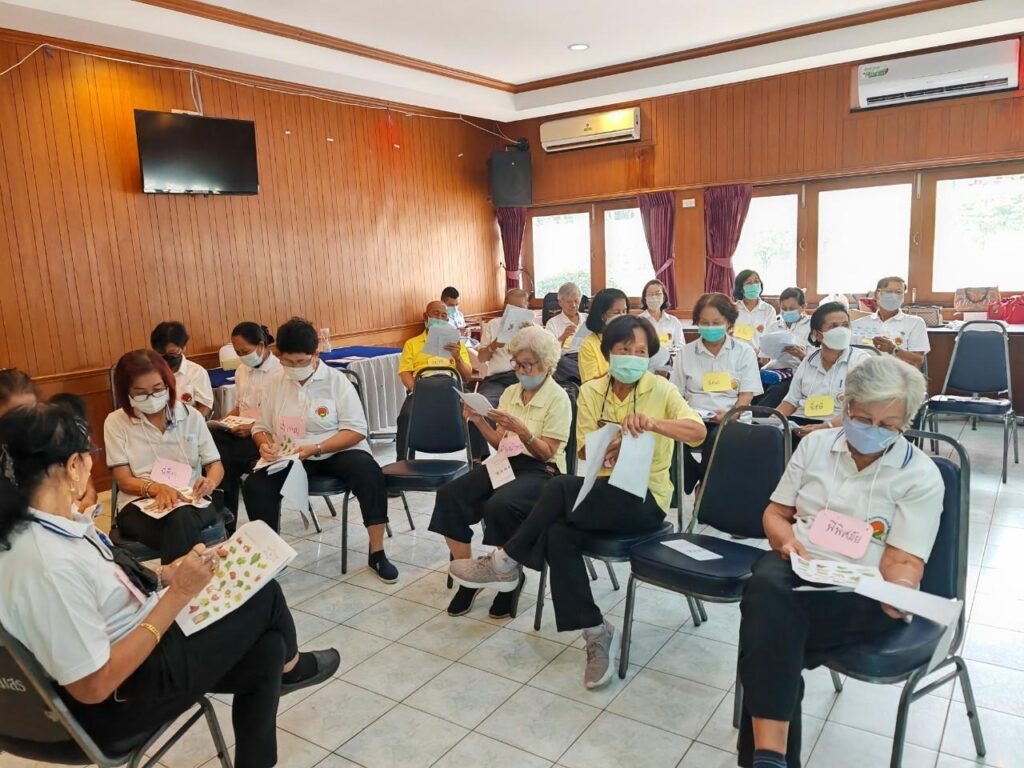
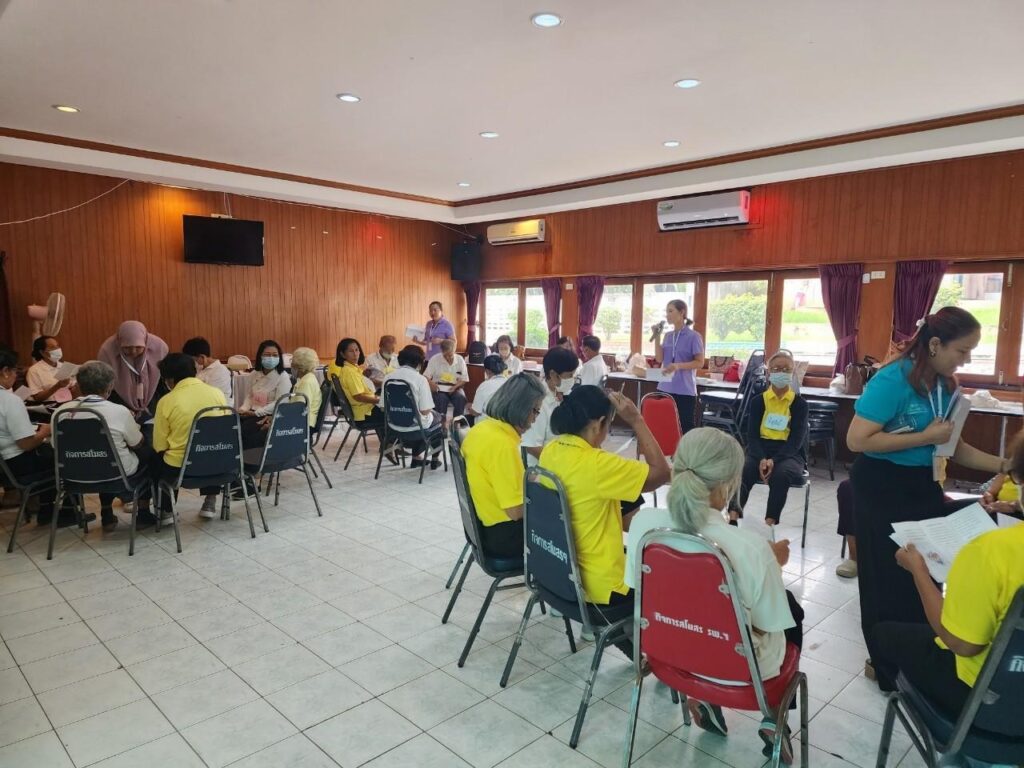
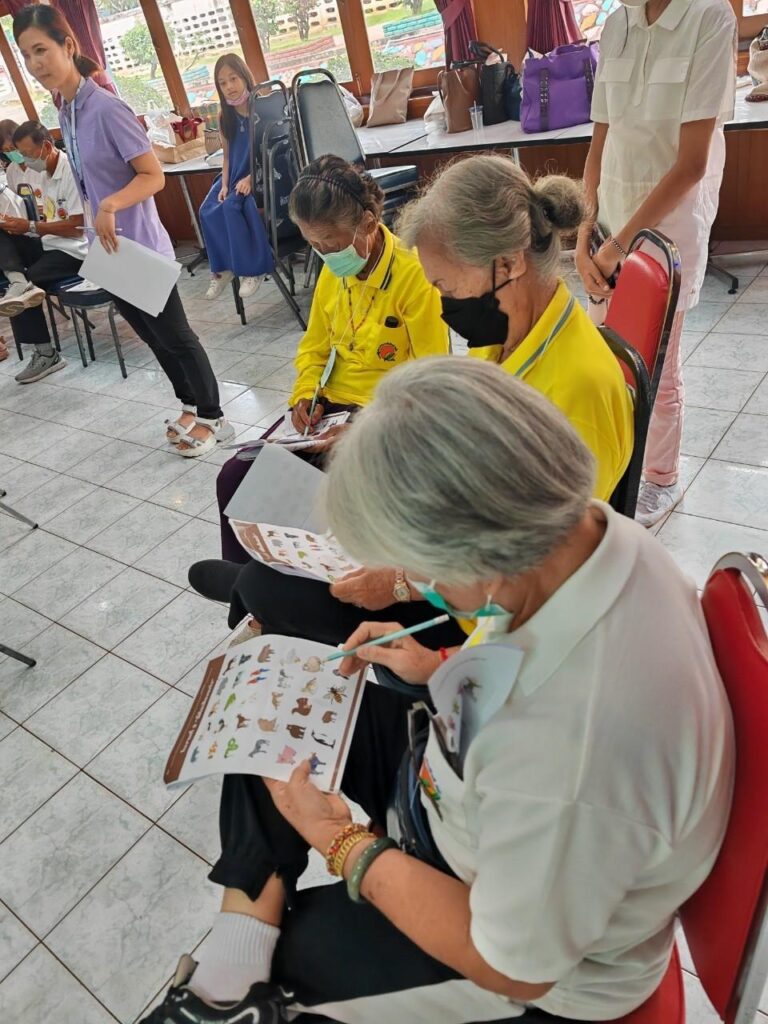
The objectives of intervention and program activities were:
1. To promote an awareness of cognitive functioning, specifically working memory, among elderly aged 60 years and above at the elderly club of Abhakornkiartiwong Hospital
2. To provide knowledge and teach basic skills of working memory training through the application of Neuro-Linguistic Programming (NLP) in order to enhance working memory capacity among elderly at the elderly club of Abhakornkiartiwong Hospital
3. To train and acquire field experience on the application of psychological strategies and Neuro-Linguistic Programming (NLP) for cognitive training among BML students.
Outcomes:
1. The implementation of Neuro-Linguistic Programming (NLP) to promote working memory capacity among elderly at the elderly club of Abhakornkiartiwong Hospital was successful.
2. BML graduate students gained training experience on the development and implementation of intervention and program activities based on knowledge in the field of Brain, Mind, and Learning. Students had the opportunity to learn about new local cultures in different local communities. Positive Impacts on the Community: Most of elderly participants had positive feedback on the intervention and program activities in accordance with the results of participant satisfaction assessment. They also provided positive feedback on gaining knowledge and skills of working memory enhancement through the application of Neuro-Linguistic Programming (NLP).
Finally, they had a positive attitude toward the care for cognitive functioning.