International Internship Pilot Program at Lean Smart Manufacturing Lab (LSM Lab) under the Collaboration for Industry and Scholar Development
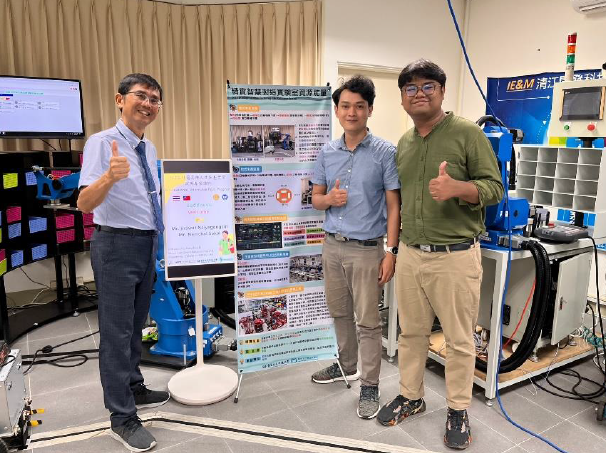
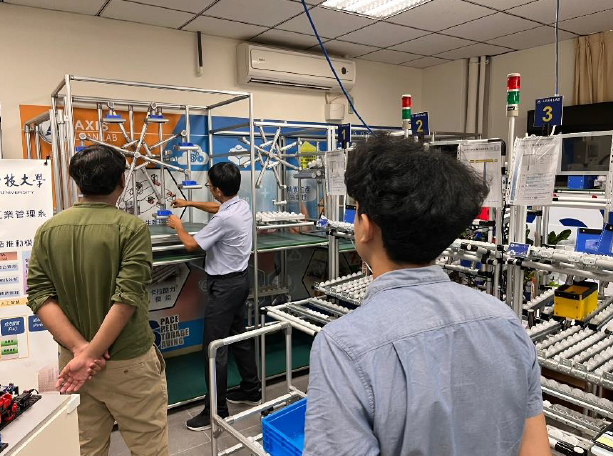
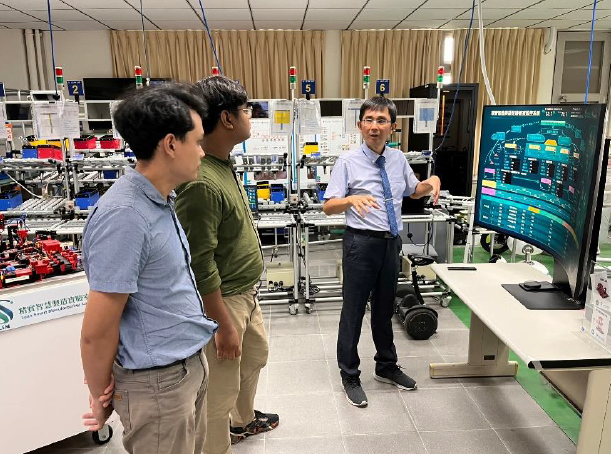
From September 1st to November 30th, the Faculty of Logistics at Burapha University facilitated the participation of two master students, Mr. Namchai Sokai and Mr. Jirawat Naiyagongsiri, in an International Internship Pilot Program at the Lean Smart Manufacturing Lab (LSM Lab) at National Formosa University, Taiwan. This initiative, supported by faculty scholarships, serves to nurture future educators while fostering collaboration between academia and industry. Aligned with SDG 9 on industry and innovation, this program exposes students to cutting-edge tools and methodologies in Lean Smart Manufacturing and the Carbon Footprint Tracing & Monitoring System. These technologies empower decision-makers to optimize factory processes, reduce waste, and enhance efficiency. By equipping students with these skills, the program contributes to SDG 8 on Decent Work and Economic Growth, as it prepares them for impactful roles in the workforce, driving innovation and productivity within the manufacturing sector.
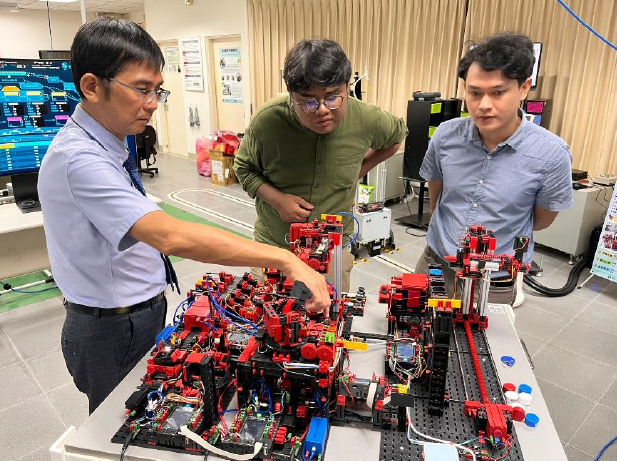
Moreover, this internship aligns with SDG 4 on Quality Education by providing students with hands-on experience and practical knowledge. Through collaboration with industry partners, such as Managing-Technology Co., Ltd and Victor Taiwan Company Ltd, students gain insights into real-world challenges and solutions, enriching their educational experience and preparing them to contribute meaningfully to society upon graduation. During the internship, students engaged in projects focused on algorithm development and task optimization, leveraging tools such as Regression, Decision Trees, Random Forest, Gradient Boosting, and Artificial Neural Networks. By applying these techniques, students aimed to enhance decision-making processes and operational efficiency, contributing to SDG 9’s emphasis on innovation and sustainable industrialization.
Furthermore, the students’ study on automated task assignments for university lecturers underscores the interdisciplinary nature of their education, incorporating elements of mixed-integer linear programming to address complex challenges. This research not only advances academic knowledge but also has practical implications for optimizing resource allocation within educational institutions, thus aligning with SDG 4’s objective of promoting inclusive and equitable education for all.
Project Leader: Mr. Paronkasom Indradat, Faculty of Logistics