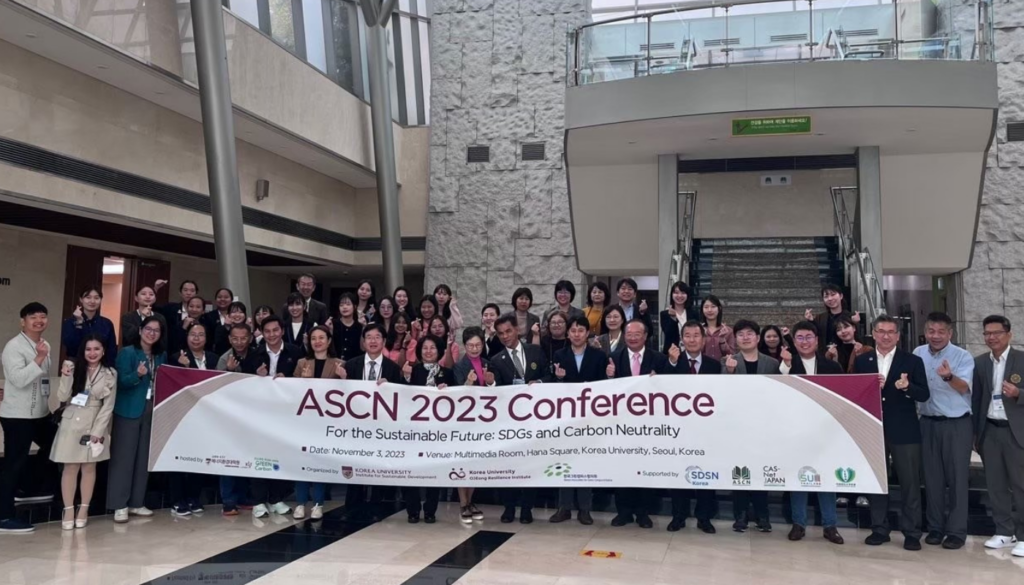
Asian Sustainable Campus Network 2023 (ASCN 2023)
For the Sustainable Future: SDGs and Carbon Neutrality
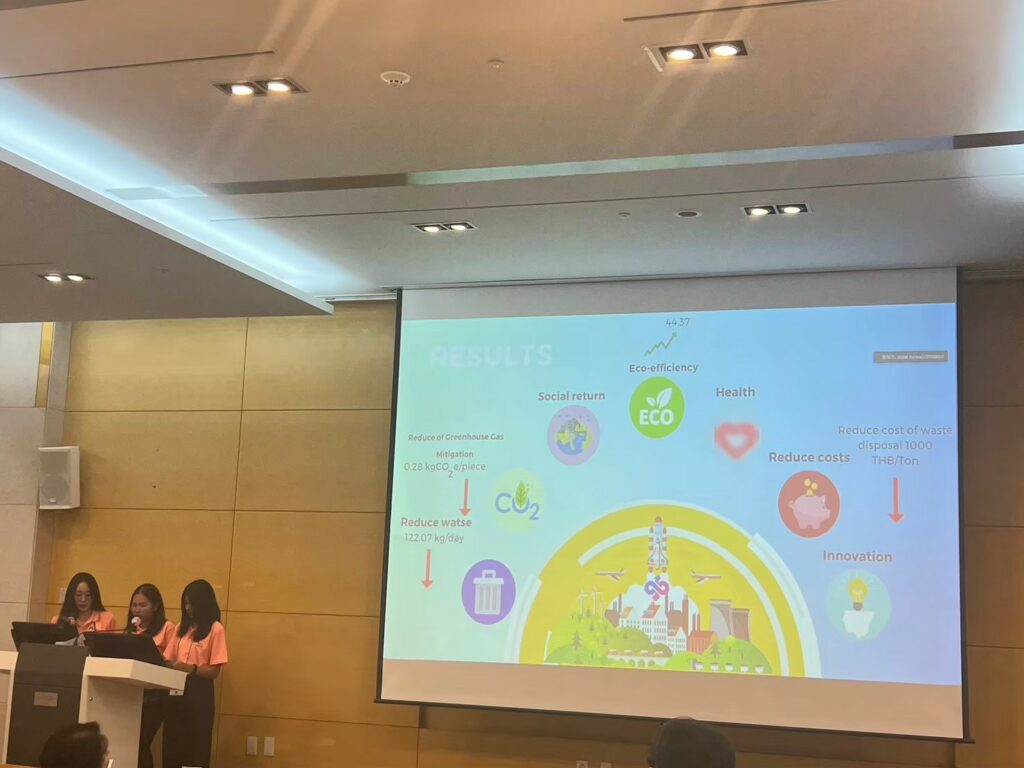
The increasing situation of industrial waste in Thailand has resulted in the government pushing for the development of the Eastern Economic Corridor. This is to reduce the amount of waste that needs to be disposed of and reuse resources. This is in line with the Sustainable Development Goals (SDG12) to ensure a sustainable pattern of production and consumption. Which aims to reduce the amount of waste through the process of reuse and recycle. In this study, the waste from the condom manufacturing process was expanded into a new product, namely brick block flooring, the objectives of the study were to the optimal ratio for the production of floor block bricks. To make a comparison between physical and leachate properties. Study the forming mechanism of floor block bricks and assess economic cost-effectiveness and eco-efficiency by applying the mixture rate between cement and shells to coarse sand to fine stone to waste (condom residue mixed with foil and sludge). In the ratio of 1:3:2:1, it consists of formulas B1, C1, and D1, and 1:3:1.5:1.5 consists of formulas B2, C2 and D2. The findings indicated that: The optimal mixing rate for making floor block bricks is 1:3:2:1. B1 and B2 floor block bricks have similar physical and leachate properties to conventional brick blocks, but have less compressive resistance than community product standards (ASTM 602/2004). Non-loadbearing type when comparing the two formulas, it was found that formula B1 has a greater compressive strength value and has leachate properties that meet all ministry announcement standards except The COD value. When assessing the economic cost-effectiveness, it was found that the production cost of waste for flooring block bricks costs about 3.37 baht per bale, which is lower than the average market floor block bricks, and the eco-efficiency assessment of formula B1 is equal to 44.37 percent. Therefore, in conclusion, industrial waste can be used to form brick blocks and can be used for flooring.
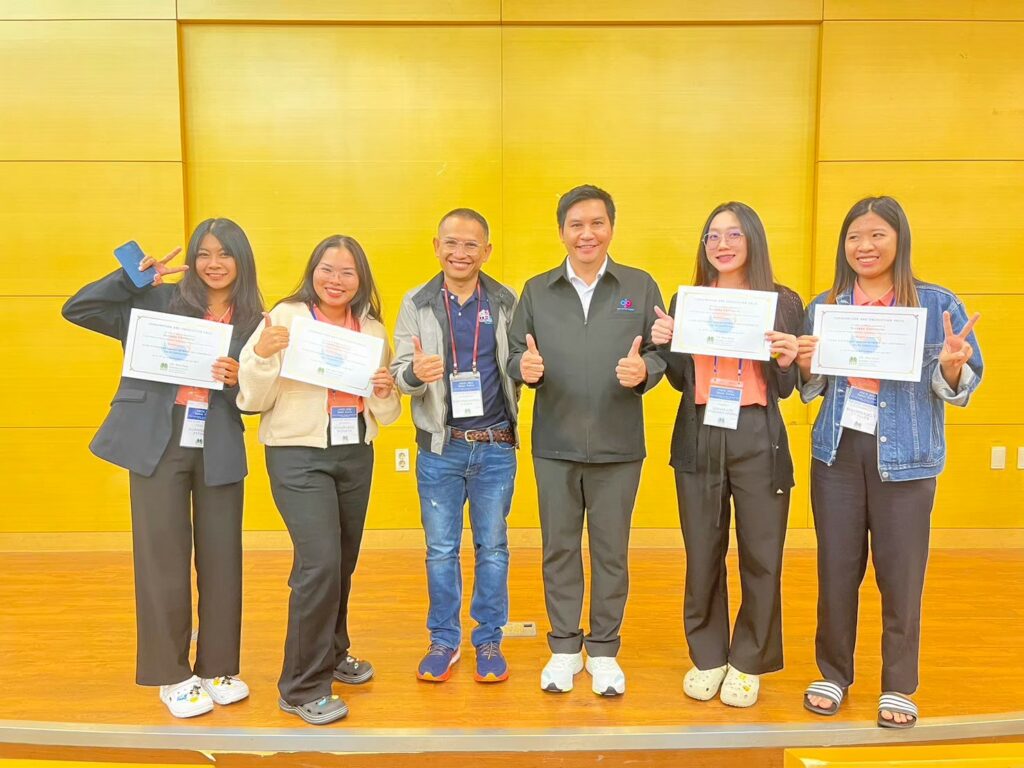
The Faculty of Public Health, Burapha University, has been awarded the Consumption and Production Prize by the Asian Sustainable Campus Network 2023, South Korea (ASCN 2023) on November 3-4, 2023.
This conference marked the first gathering for exchanging knowledge on sustainability, featuring presentations of sustainability initiatives by students from member countries. Additionally, during the academic networking conference of sustainable universities in Thailand on January 20, 2023., the Faculty of Public Health received the National Innovation Award for Sustainability under the project “Utilization of waste from the condom manufacturing process to paving bricks production for circular economy implementing practice.
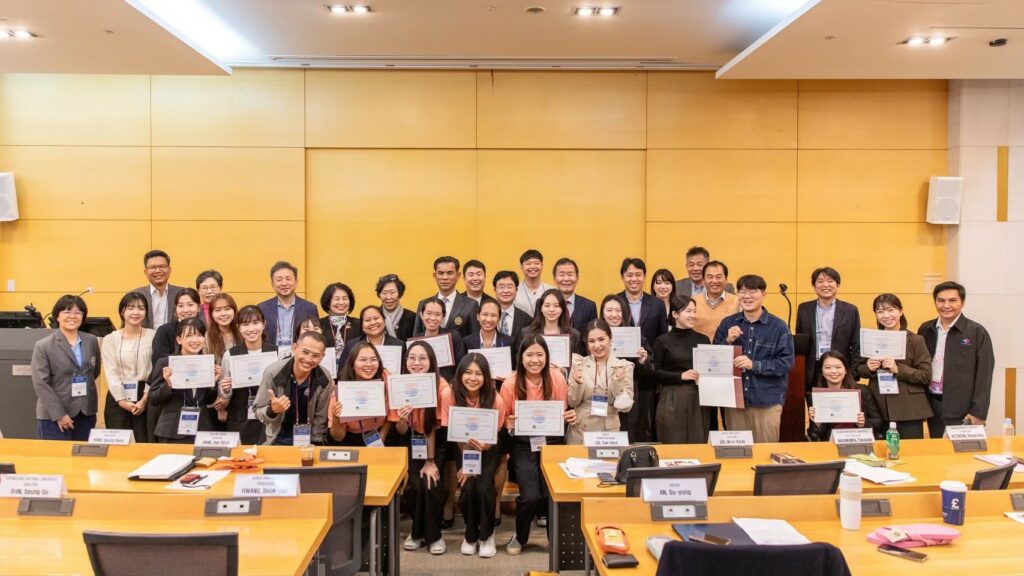
Project Leader: Asst. Prof. Dr. Kowit Suwannahong, Faculty of Public Health