
Brain, Mind, and Learning (BML) Student Field Experience Program
at Wattator Lert Boonyong Wittaya School, Phra Nakhon Si Ayutthaya Province, Thailand :
Memory Enhancement Training Using Neuro-Linguistic Programming for Early Primary School Children

Early primary school children undergo significant physical, emotional, and social development. This developmental stage is characterized by preparation across various domains, including physical, emotional, social, and intellectual aspects. Children in this age group undergo a growing learning experience through a variety of daily activities. This leads to the adaptation of cognitive and learning patterns based on encountered experiences, thereby initiating the development of skills across various domains and the recognition of individual strengths and weaknesses. Hence, promoting cognitive function, particularly in the domain of
working memory, is crucial in this age group. Working memory is a core cognitive domain essential for learning.
The Neuro-Linguistic Programming (NLP) program is an integrative theory that can be applied to enhance working memory, supported by empirical evidence demonstrating its benefits. It can strengthen the brain’s executive functions, working memory, attention, and inhibitory control. For example, techniques such as “Anchoring” and the “Pillars of NLP”, which include building rapport, setting clear goals, and sensory acuity, can enhance focused attention. Additionally, NLP is designed to provide individuals with skills for positive change, decision-making, and strategic thinking, ultimately leading to greater capacities of cognitive flexibility as well as information processing. During early childhood, the brain’s cellular networks undergo rapid and extensive development. A strong and efficient neural network can lead to higher-level cognitive function and have a significant impact on learning and memory.
Working memory is a system that concurrently holds multiple pieces of information in the mind. Moreover, these pieces of information are interconnected and can be retrieved and utilized as needed in different situations. This aligns with Baddeley’s model of working memory, which consists of four components:
the visuospatial sketchpad, the phonological loop, the central executive, and the episodic buffer. Enhancing these components of working memory
can be achieved through movements associated with language processing, such as moving lips, hands, or body, utilizing inner speech or inner voice, and generating visual imagery to perceive and memorize a wide variety of information, including objects, movements, and environments. Similarly, NLP involves perception through representational systems (visual, auditory, and kinesthetic systems). If children can improve perception and memory retention, they will
effectively acquire a greater capacity for memory consolidation. This can be achieved through cognitive-promoting activities, skill training, or memory-enhancing activities through diverse sensory experiences.
Recognizing this importance, faculty members and graduate students in the Brain, Mind, and Learning (BML) program have organized a workshop on March 1 st, 2024, to enhance working memory through the implementation of Neuro-Linguistic Programming (NLP), a psychological strategy that can promote better cognitive functioning in children. Furthermore, the BML graduate students could further develop academic knowledge, skills, and experience through
this workshop with the benefits to other people in the communities and societies.
Objectives:
The objectives of the field experience program and activities were:
1. To develop a working memory-enhancing program for early primary school children through the implementation of Neuro-Linguistic Programming (NLP).
2. To teach basic working memory training skills through the application of Neuro-Linguistic Programming (NLP) to enhance working memory capacity among early primary school children in Wattator Lert Boonyong Wittaya School, Phra Nakhon Si Ayutthaya Province, Thailand
3. To train and acquire field experience in the application of Neuro-Linguistic Programming (NLP) and other psychological strategies for cognitive training among BML students.
Outcomes:
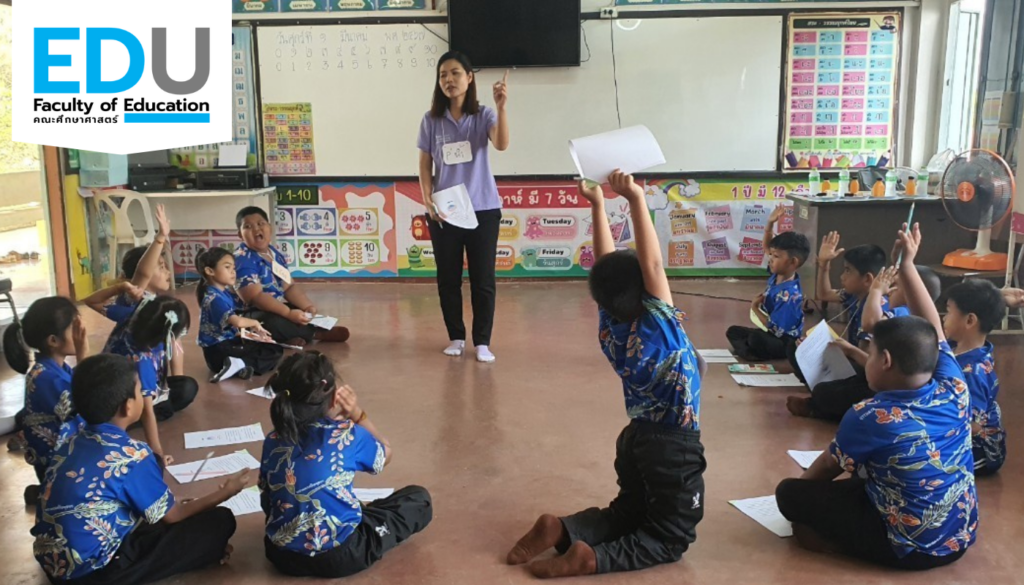
1. The implementation of Neuro-Linguistic Programming (NLP) to promote working memory capacity among early primary school students of Wattator Lert Boonyong Wittaya School was successful. Children practiced cognitive skill training using a wide variety of methods to enhance working memory based on their individual aptitude and preferences. The working memory training strategies included auditory training, repetition, visual training through observation (focusing on characteristics such as shapes and colors), imaginative exercises combined with physical movement, and memory training through tactile sensation, such as feeling objects in a random box. Additionally, early primary school children demonstrated goal-setting behaviors after memory goal-setting activities and were able to apply anchoring techniques.
2. BML graduate students gained training experience in developing and implementing intervention and program activities based on their knowledge in the field of Brain, Mind, and Learning. They also had the opportunity to learn about new local cultures in various communities.
Positive Impacts on the Community:
Early primary school children provided positive feedback on the program activities, as indicated by satisfactory assessment results. They also exhibited positive behaviours during the working memory enhancement training activities utilizing Neuro-Linguistic Programming (NLP). Children actively participated in the training sessions and enthusiastically expressed their opinions by competing to raise their hands and answer questions. This demonstrated a sufficient level of understanding and application in daily life.

Project Leader: Assoc. Prof. Dr. Juthamas Haenjohn, Asst. Prof. Dr. Warakorn Supwirapakorn, and Dr. Jatuporn Namyen,
Department of Research and Applied Psychology, Faculty of Education