The Signing of an Academic Memorandum of Understanding (MOU)
between the Secondary Education Service Area Office Chanthaburi Trat and Burapha University
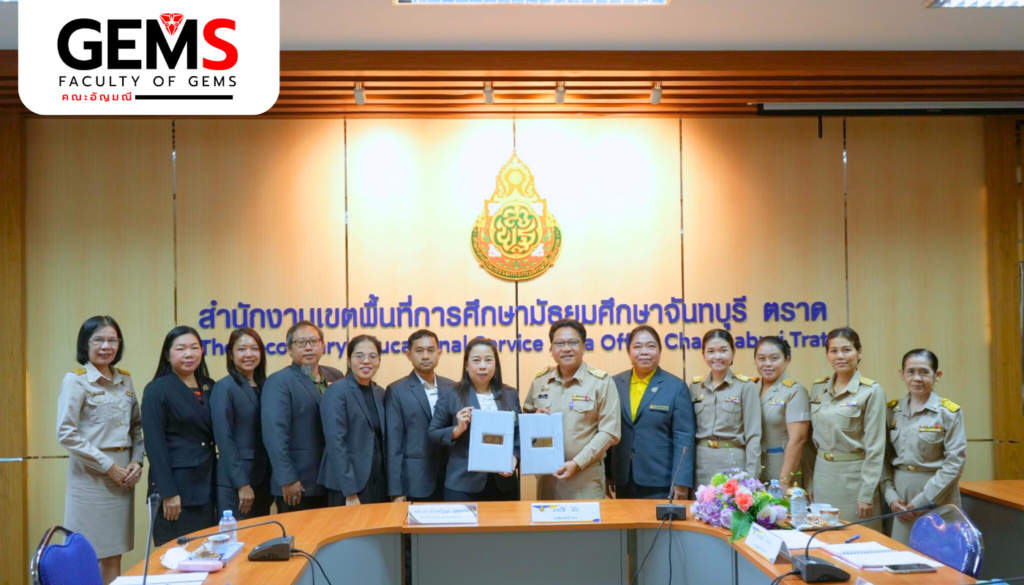
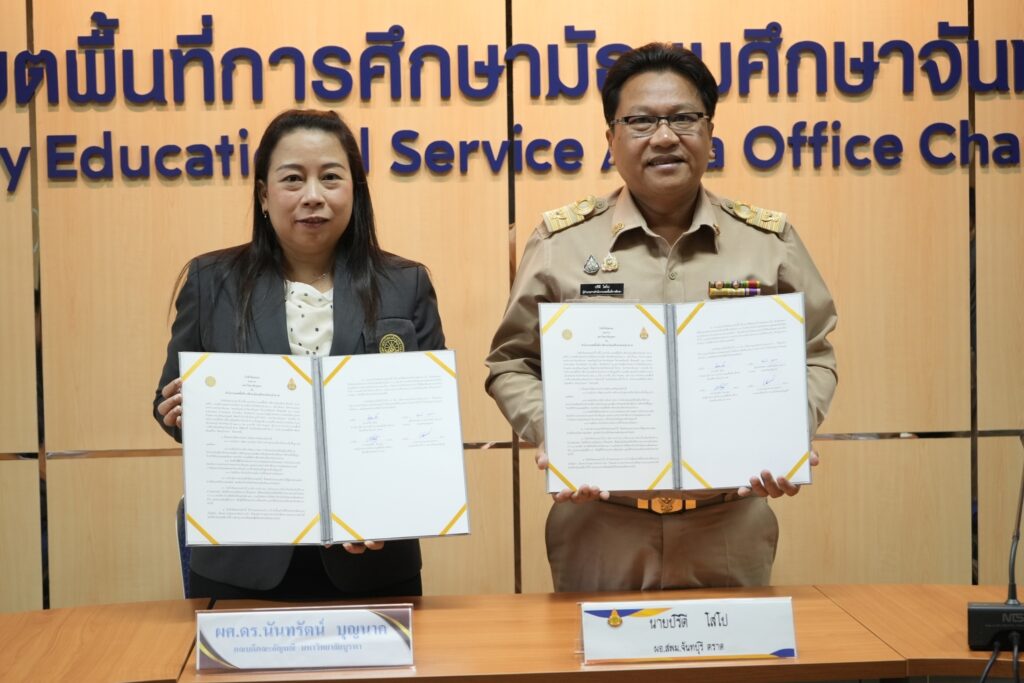
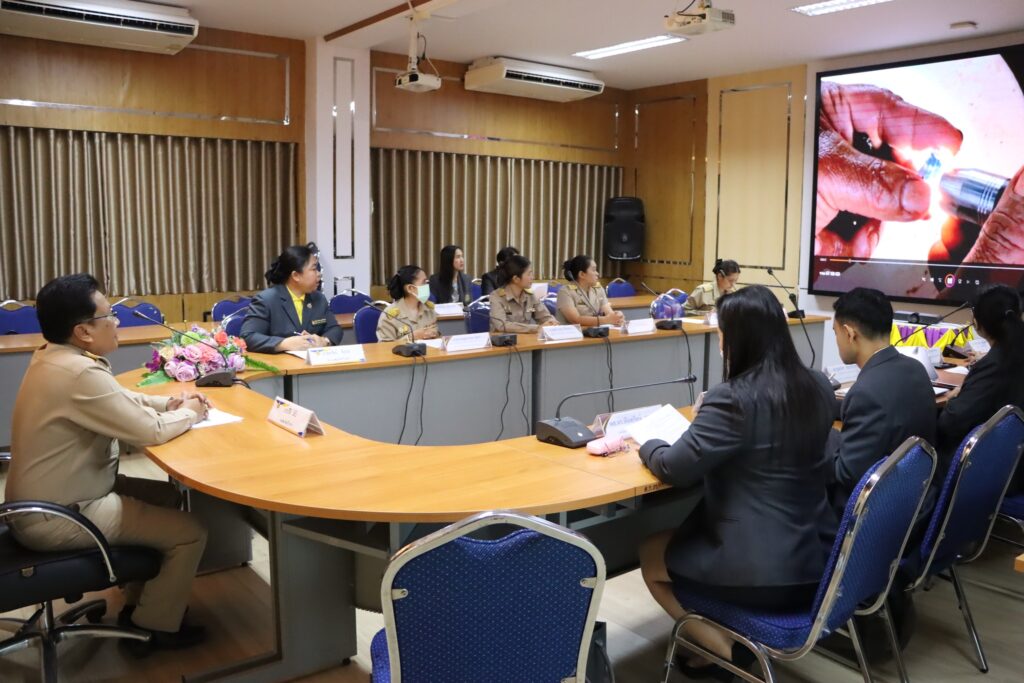
On Tuesday, September 24, 2024, at the Thaweephon Conference Room, the Secondary Educational Service Area Office Chanthaburi Trat, led by Mr. Preedee Sopo, Director of the office, and Ms. Amornrat Jankrit, Deputy Director, along with the education supervision, monitoring, and evaluation team, participated in a signing ceremony for an academic Memorandum of Understanding (MOU). This MOU was signed between the Secondary Educational Service Area Office Chanthaburi Trat and Burapha University. The President of Burapha University authorized Assistant Professor Dr. Nantharat Bunnag, Dean of the Faculty of Gems, to sign the MOU. Witnesses included faculty members from the Faculty of Gems, staff from the Administration Chanthaburi Campus Division Office of the President Burapha University, and representatives from Watkireewiharn (Somdej Phrawannarat Auppatham) School, Nayaiam Pittayakom School, Kaenghangmaew Pittayakarn School, and Borwittayakarn School.
This signing marks a significant step toward fostering collaboration between higher education institutions and local communities. The goal is to develop curricula aligned with the needs of students in Chanthaburi and Trat provinces. The Credit Accumulation System, or Credit Bank, will allow students to learn and accumulate credits at their own pace, based on their availability and readiness. This system provides opportunities for learners from all backgrounds, including those who wish to develop additional skills or change career paths, without the need for continuous long-term study.
The signing of this MOU not only supports curriculum development but also has a positive impact on sustainable social, economic, and environmental development. Promoting education in Chanthaburi and Trat will help improve the quality of life for students and the community. Linking curricula with the needs of the local labor market, particularly in the gem and jewelry industry—an essential industry in the region—will create employment opportunities, generate income, and develop skills for youth and workers in the area. The development of flexible curricula that respond to community needs will enhance the capabilities of local personnel, leading to robust and sustainable economic growth in the region. Additionally, education that considers sustainable development can instill environmental awareness in students, fostering efficient resource use and environmental conservation within the community.
Project leader: Lecturer Dr. Aumaparn Phlayrahan, Faculty of Gems