Workshop on the Use of Foreign Languages in the Workplace
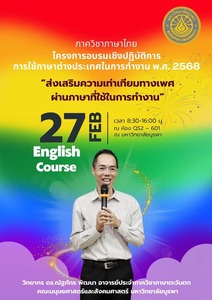
The Department of Thai Language organized a workshop titled “Promoting Gender Equality through Language Use in the Workplace”, recognizing the importance of preparing students to use English appropriately in work settings while respecting gender diversity. This aligns with SDG 5: Gender Equality, with a focus on gender-neutral language to reduce bias and foster an inclusive organizational culture.
The appropriate use of language not only opens up greater career opportunities and builds confidence in international professional environments but also encourages discrimination-free communication. This project aims to help students understand the role of language in promoting gender equality and to develop ethical and professional English communication skills, which are fundamental for working in a modern world that values diversity and mutual respect.
The objective of this project was shown as follows,
1. First-year Thai Language students will develop foreign language skills for appropriate and gender-respectful workplace communication.
2. Students will be better prepared for internships in public and private organizations.
3. The project will help achieve the strategic mission of the Faculty of Humanities and Social Sciences.
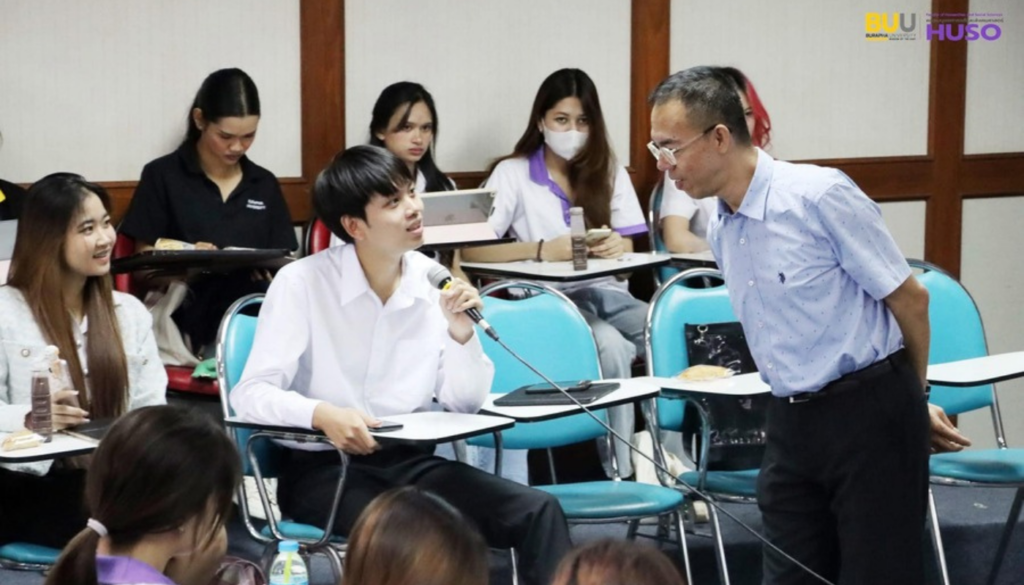
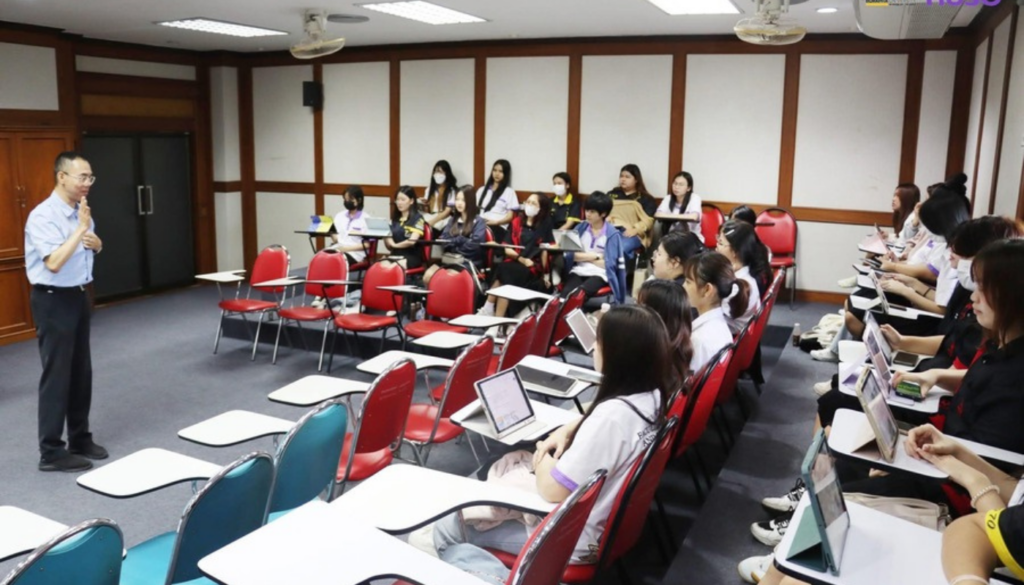
The workshop titled “Promoting Gender Equality through Language Use in the Workplace” was conducted by Dr. Nattapat Pattana, a knowledgeable and experienced guest speaker. The session included both theoretical knowledge and practical training to prepare students for their upcoming internships.
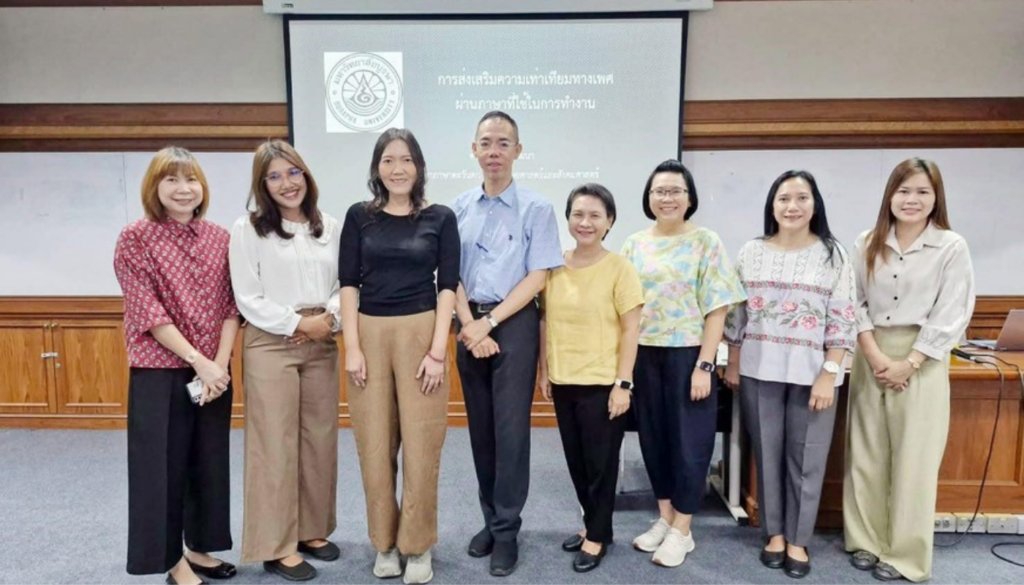
The training was attended by 74 first-year Thai Language students and 11 faculty members and staff from the department.
This project positively impacted the development of students as high-quality professionals with appropriate and professional foreign language skills, especially for communicating in gender-diverse workplaces—an increasingly relevant issue today.
Students gained knowledge of gender-neutral language and learned to apply it effectively in real-world situations. The workshop promoted values of equality and enhanced the faculty’s role in producing academically and professionally competent graduates. It emphasized integrating linguistic knowledge with social issues, enabling graduates to be active contributors to a more equitable society.
It supported SDG 5: Gender Equality by promoting gender inclusivity through language, a vital tool in reducing bias and building an inclusive society, aligned with the global and institutional goals for sustainable development.
Project leader: Asst. prof. Khajita Sripoom, Ph.D. Apirak Chaipanha, Ph.D, Faculty of Humanities and Social Sciences