Project on Waste Management Promotion and Education
on Orphan Waste for Sustainable Development
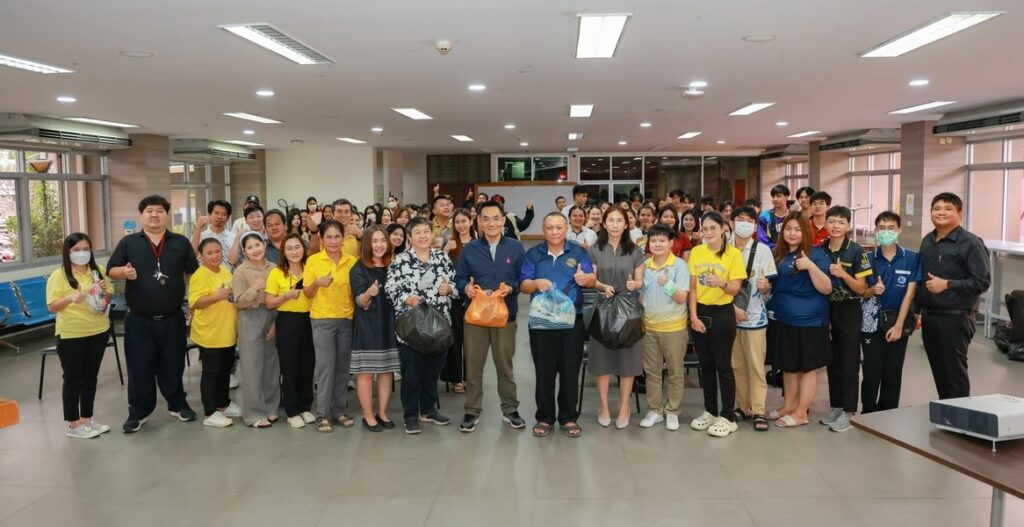
This initiative has been conducted for three consecutive years, integrating knowledge from the courses Politics of the Environment and Local Civic Movements and Social Change and Social Movements, under the responsibility of Associate Professor Rungnapa Yanyongkasemsuk, in collaboration with the Office of the Dean, Faculty of Political Science and Law.
The primary objective of this project is to raise awareness among administrators, faculty members, staff, and students regarding the importance of waste management, particularly orphan waste. Effective waste management is crucial for achieving sustainable development. Furthermore, this initiative serves as a practical application of the theoretical knowledge acquired in the classroom.
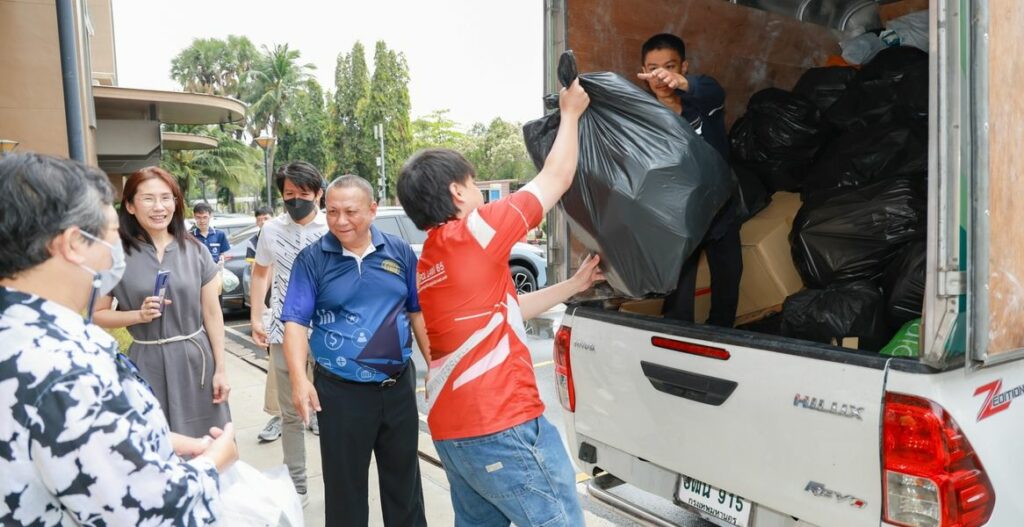
The Project on Waste Management Promotion and Education on Orphan Waste for Sustainable Development is implemented through key activities, including a lecture on orphan waste and its connection to sustainable development, aimed at enhancing participants’ understanding of effective waste management practices. Additionally, the project organizes an orphan waste collection initiative, allowing members of the Faculty of Political Science and Law to actively participate in waste segregation and collection for energy conversion. Now in its third consecutive year, the project integrates knowledge from courses on environmental politics and social movements into practical applications. This initiative is carried out in collaboration with the Office of the Dean, Faculty of Political Science and Law, fostering sustainable waste management behaviors while actively supporting the United Nations Sustainable Development Goals (SDGs).

Project Outcomes
The “Project on Waste Management Promotion and Education on Orphan Waste for Sustainable Development” has yielded tangible results in both knowledge dissemination and practical application. Participants, including administrators, faculty members, staff, and students, have gained valuable insights into orphan waste management and its environmental impact. This has fostered awareness and encouraged initiatives to reduce waste within the university. Additionally, the project successfully collected 220 kilograms of orphan waste, which was processed and converted into energy, thereby minimizing inefficient waste disposal. Furthermore, it has strengthened collaboration between the Faculty of Political Science and Law and relevant organizations, paving the way for sustainable waste management practices in the future.
Project Leaders: Assoc. Prof. Rungnapa Yanyongkasemsuk, Mr.Touch Khanthaprasit,
Faculty of Political Science and Law