
Traditional Thai New Year Celebration at Faculty of Engineering Promotes Cultural Sustainability
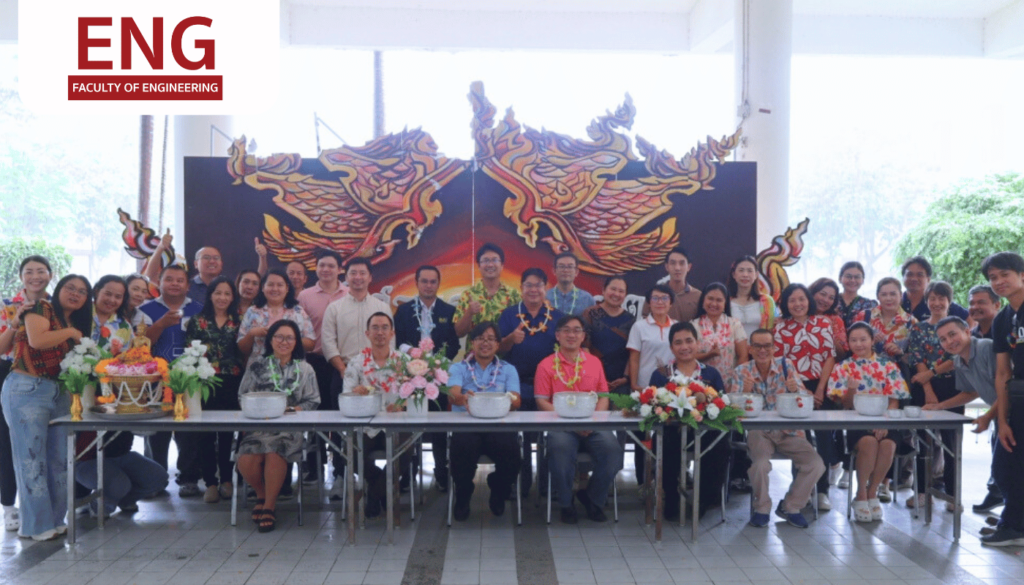
Faculty of Engineering Celebrates Songkran with Water Blessing Ceremony for Senior Faculty Members
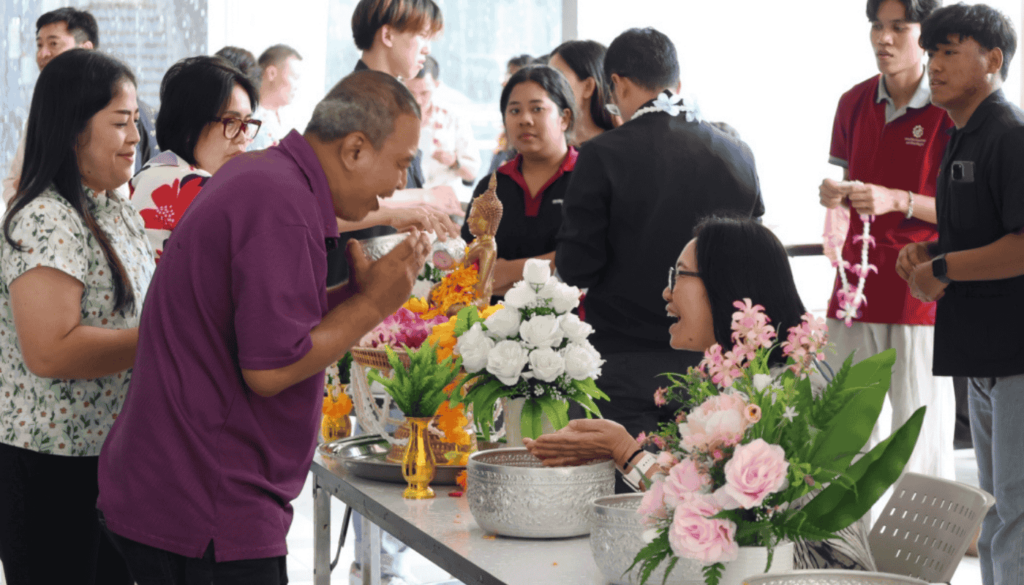
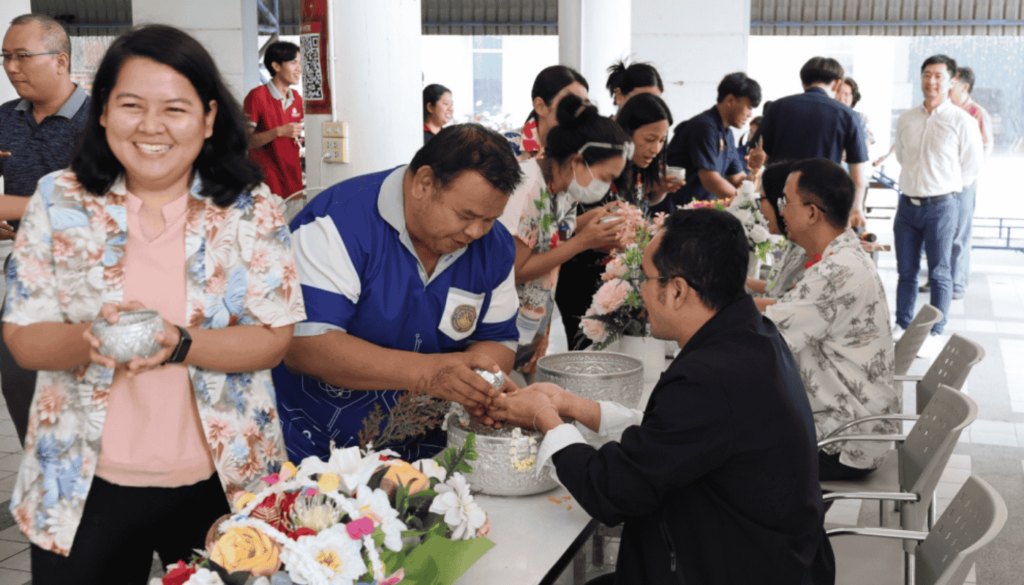
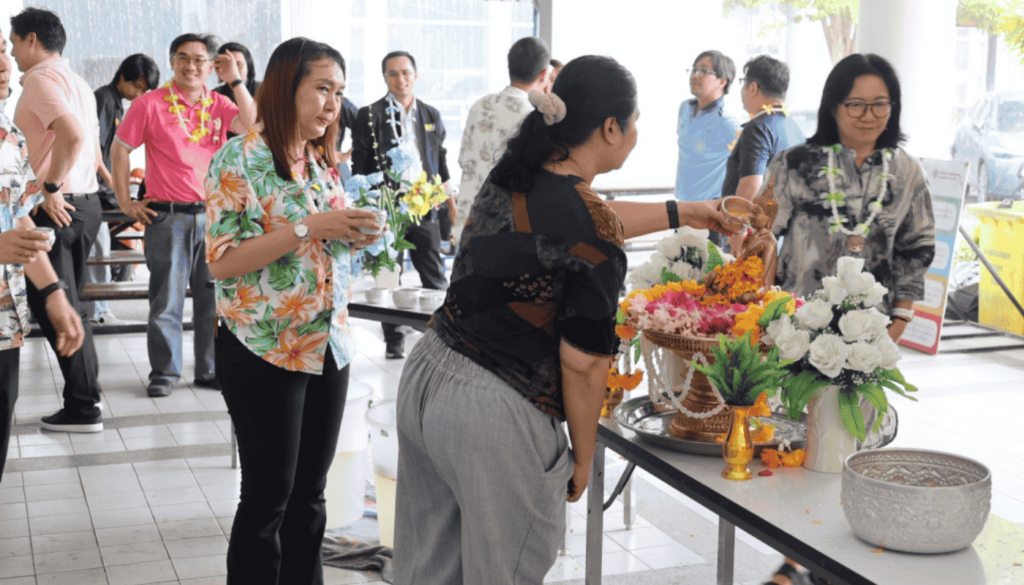
On April 8, 2025, the Faculty of Engineering in collaboration with the Engineering Student Club organized a traditional Thai New Year (Songkran) celebration at Burapha University. The event featured the sacred Buddha image bathing ceremony and the traditional water blessing ritual for senior faculty members, held at the activity courtyard of the Kasem Chatikavnich Building.
The celebration brought together faculty members, staff, and students in a meaningful cultural exchange that highlights the university’s commitment to Sustainable Development Goal 4 (Quality Education) and SDG 11 (Sustainable Cities and Communities), with particular emphasis on safeguarding cultural heritage.
Preserving Cultural Heritage in Academic Settings
The Songkran celebration represents more than just a festive occasion; it embodies the faculty’s dedication to preserving and promoting Thai cultural heritage within the academic environment. By organizing this traditional ceremony, the Faculty of Engineering demonstrates how educational institutions can play a vital role in cultural sustainability. Assistant Professor Nayot Kurukitkoson Ph.D., Dean of the Faculty of Engineering, emphasized the importance of such cultural practices: “While we focus on technological advancement and innovation in our academic programs, we must not forget the cultural foundations that shape our identity. This Songkran celebration allows our students to connect with Thai traditions and understand the importance of respect for elders and cultural continuity.”
Intergenerational Knowledge Transfer
The water blessing ceremony for senior faculty members is a platform for intergenerational knowledge exchange. Senior professors shared their experiences and wisdom with younger faculty members and students, creating an informal mentoring opportunity that complements formal academic instruction.
This aspect of the celebration directly supports SDG 4.7, which aims to ensure that all learners acquire the knowledge and skills needed to promote sustainable development, including through education for sustainable lifestyles, human rights, gender equality, promotion of a culture of peace and non-violence, global citizenship, and appreciation of cultural diversity.
Building Community Cohesion
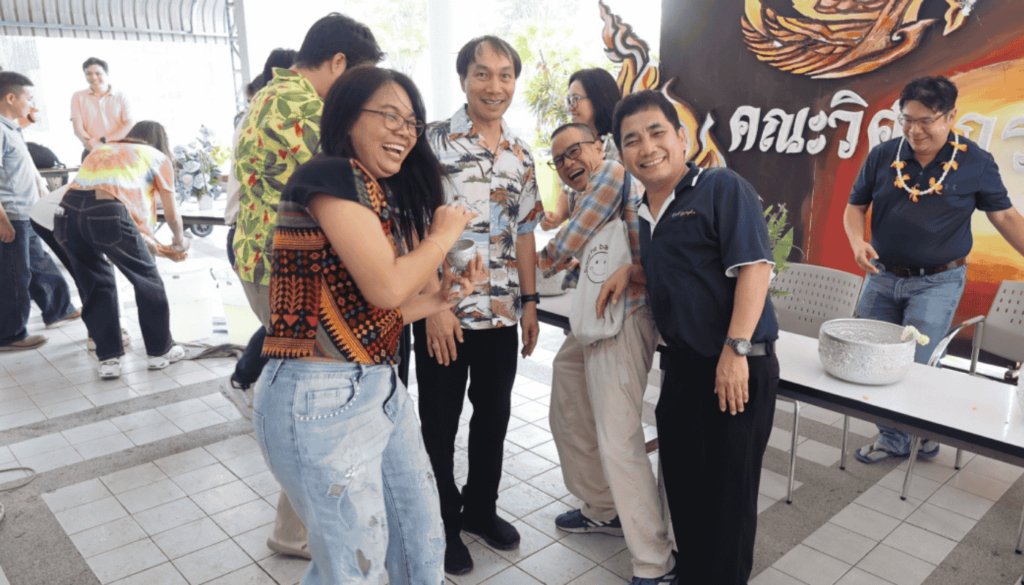
The Songkran celebration fostered a sense of community among the approximately 2,000 students and 157 faculty and support staff of the Engineering Faculty. Such community-building activities create social cohesion and strengthen the support network within the university, contributing to student well-being and academic success.
The Engineering Student Club played a significant role in organizing the event, providing students with leadership opportunities and experience in event management. This student involvement reinforces SDG 4.4, which focuses on increasing the number of youth and adults who have relevant skills for employment, decent jobs, and entrepreneurship.
Cultural Sustainability and SDG 11
The preservation of cultural traditions aligns directly with SDG Target 11.4, which aims to “strengthen efforts to protect and safeguard the world’s cultural and natural heritage.” By incorporating traditional Thai celebrations into the academic calendar, the Faculty of Engineering contributes to this goal in a meaningful way. The event demonstrated how educational institutions can serve as custodians of cultural heritage while preparing students for future challenges. This balance between tradition and innovation is essential for truly sustainable development that respects cultural identity while embracing progress.
Environmental Considerations
In line with the faculty’s commitment to environmental sustainability, the Songkran celebration was organized with attention to reducing waste and water conservation. Unlike traditional Songkran water festivals that often involve large amounts of water, the ceremony focused on the symbolic aspects of the water blessing, using minimal water for the ritual purposes.
This approach connects traditional practices with modern sustainability concerns, demonstrating how cultural celebrations can be adapted to address environmental challenges without losing their essential meaning and significance.
Looking Forward
The successful Songkran celebration at the Faculty of Engineering serves as a model for how universities can integrate cultural heritage preservation into their institutional activities. By connecting traditional practices with the Sustainable Development Goals, Burapha University continues to demonstrate its holistic approach to education and sustainability.
As educational institutions worldwide seek to balance technological advancement with cultural preservation, this celebration provides a valuable example of how tradition and innovation can complement rather than oppose each other, creating a more culturally rich and sustainable academic environment for future generations.
Project Leaders: Student Union Faculty of Engineering, Burapha University