
Burapha University Researchers Develop Innovative Myoelectric Prosthetic Arm
for Below-Elbow Amputees
Advancing SDG 3 and SDG 10 Through Assistive Technology Innovation
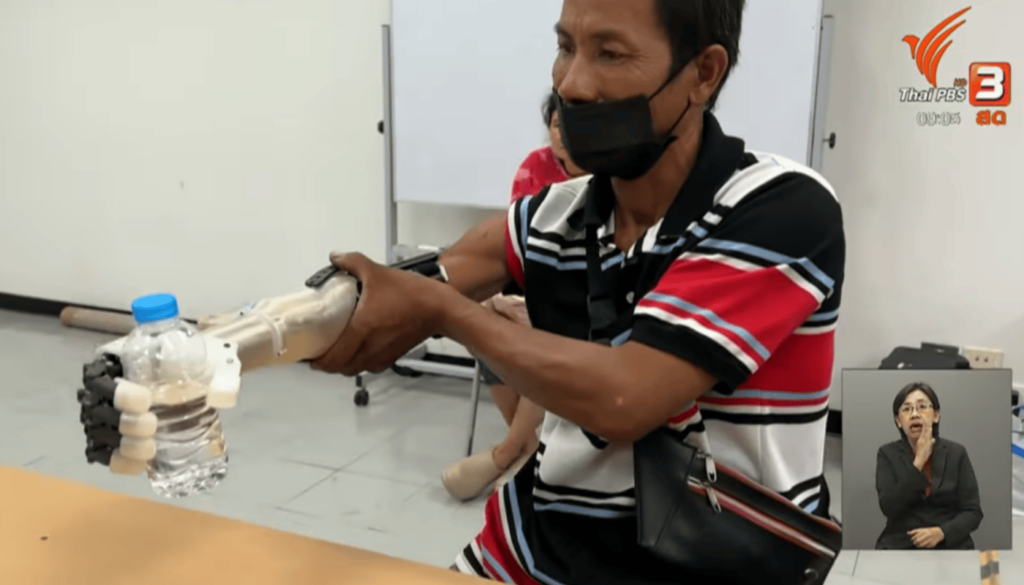
A research team from Burapha University has developed a groundbreaking “Myoelectric Prosthetic Arm for Below-Elbow Amputees” that stands out for its user-friendly design and natural responsiveness to the user’s muscle movements. This innovation represents a significant advancement in assistive technology that directly contributes to Sustainable Development Goal 3 (Good Health and Well-being) and SDG 10 (Reduced Inequalities).
The aims of Project:
1. Develop an Advanced Prosthetic Solution – Create a user-friendly, myoelectric prosthetic arm for below-elbow amputees that responds naturally to muscle movements. – Integrate AI technology to improve accuracy and adaptability.
2. Enhance Quality of Life for Amputees – Improve physical functionality (grip patterns, daily activities). – Support psychological well-being and social integration by restoring mobility and independence.
3. Promote Accessibility & Affordability – Design a prosthetic arm that is cost-effective and accessible for Thai users. – Ensure the technology is practical and adaptable to individual needs.
4. Contribute to Sustainable Development Goals (SDGs)
– SDG 3 (Good Health & Well-being): Improve health outcomes and mental well-being for amputees.
– SDG 10 (Reduced Inequalities): Empower people with disabilities by enhancing social and economic inclusion.
– SDG 9 (Industry, Innovation & Infrastructure): Advance Thailand’s biomedical engineering capabilities.
5. Drive Local Innovation & Research Excellence
– Showcase Thai-developed assistive technology on national platforms (e.g., Thai PBS).
– Strengthen university-industry collaboration for real-world problem-solving.
6. Expand Future Impact
– Refine the design based on user feedback.
– Explore scalable production and distribution to benefit more amputees.
This project aligns with Burapha University’s mission to combine cutting-edge research with social impact, fostering an inclusive society through technological innovation.
Addressing a Critical Need in Thailand
Thailand has a substantial population of individuals with arm or wrist disabilities, primarily resulting from accidents, illnesses, or genetic conditions. These challenges affect not only daily activities but also impact multiple dimensions of quality of life, including psychological well-being, social integration, and employment opportunities.
To address these challenges and improve the quality of life for people with disabilities, prosthetic technology has been continuously evolving. The latest advancement from Burapha University incorporates cutting-edge artificial intelligence (AI) to enhance accuracy and natural responsiveness in prosthetic limbs.
Innovative Research Team
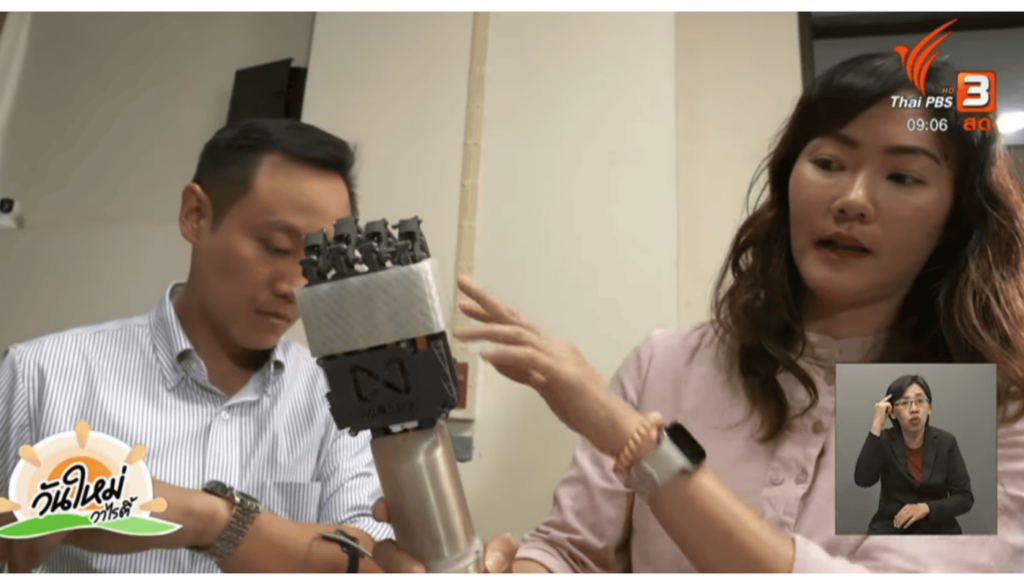
This pioneering work has been developed by Dr. Pisak Chermprayong and Assistant Professor Dr. Mattana Santasnachok from the Faculty of Engineering at Burapha University. Their research was recently featured on Thai PBS’s “Wanmai Variety” program in the “Thai Creative Inventions” segment, highlighting the national significance of this innovation.
Technical Innovation with Social Impact
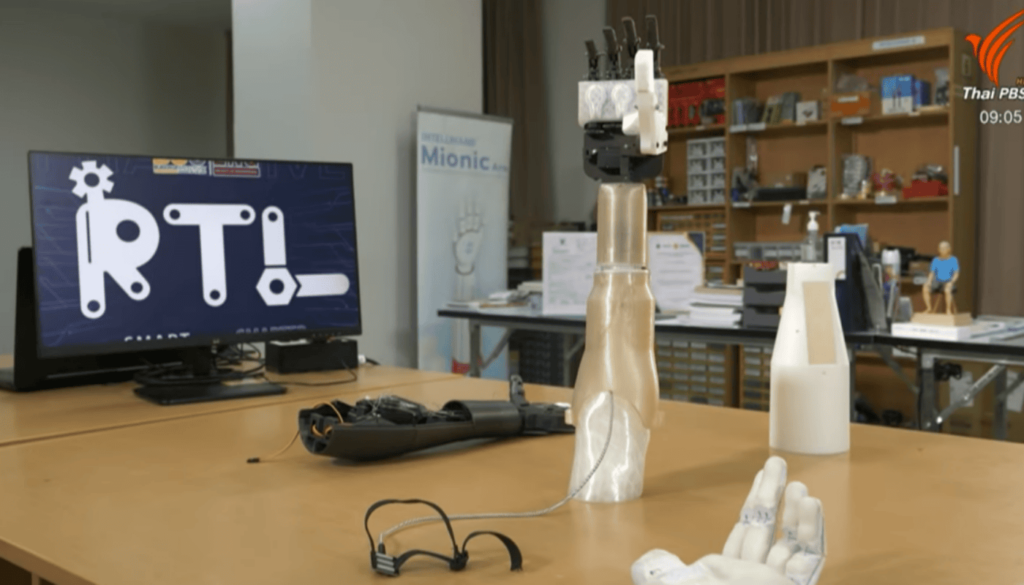
The myoelectric prosthetic arm utilizes electrical signals from the user’s remaining muscles to control movement, offering a more intuitive and natural control mechanism than traditional mechanical prosthetics. Key features of this innovative technology include:
1. Intuitive Control System: The prosthetic arm responds to the electrical signals generated by the user’s muscle movements, allowing for more natural control.
2. Enhanced Functionality: Users can perform various grip patterns and movements essential for daily activities.
3. Accessibility Design: The team focused on creating a solution that is not only functional but also accessible and affordable for Thai users.
4. AI Integration: Artificial intelligence algorithms help improve the accuracy of movement and adapt to the user’s specific patterns over time.
Contribution to Sustainable Development Goals
This research directly supports multiple dimensions of the United Nations Sustainable Development Goals:
SDG 3: Good Health and Well-being
By providing improved assistive technology solutions, this innovation contributes to target 3.4, which aims to reduce premature mortality from non-communicable diseases and promote mental health and well-being. The prosthetic arm helps improve the physical and psychological health of individuals with limb differences.
SDG 10: Reduced Inequalities
The development of accessible prosthetic technology addresses target 10.2, which aims to empower and promote the social, economic, and political inclusion of all, regardless of disability status. By enabling greater independence and functionality, this technology helps reduce inequalities faced by people with disabilities.
SDG 9: Industry, Innovation, and Infrastructure
The research exemplifies target 9.5, which calls for enhancing scientific research and upgrading technological capabilities. This locally developed innovation demonstrates Thailand’s growing capacity in advanced biomedical engineering.
Broader Implications for an Inclusive Society
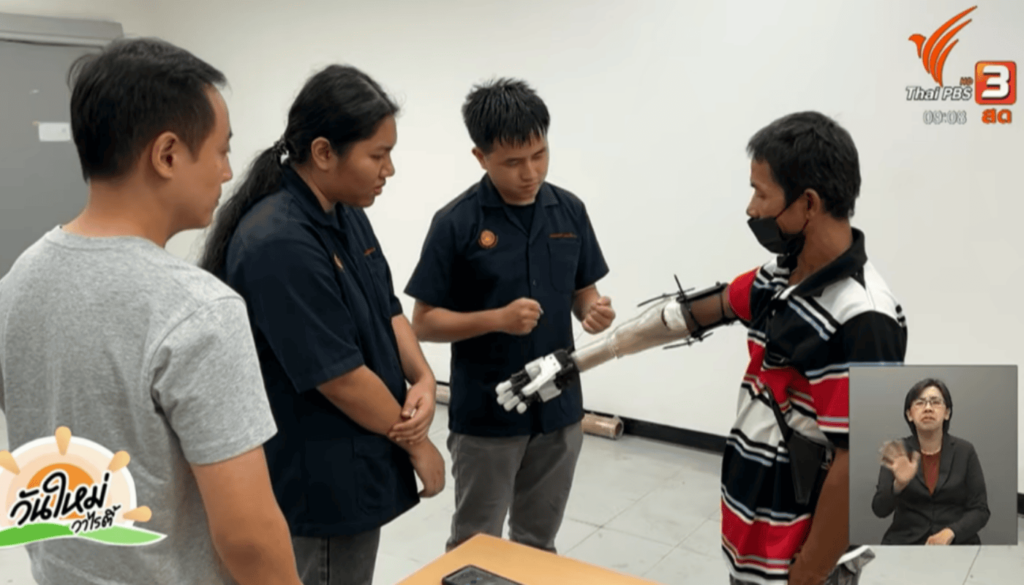
Beyond the immediate benefits to users, this innovation represents an important step toward creating a more inclusive society where technological solutions help overcome physical limitations. The research team’s work demonstrates how targeted engineering solutions can address specific challenges faced by marginalized groups.
The development of the myoelectric prosthetic arm also illustrates the important role that universities play in applying research to solve real-world problems, particularly those affecting vulnerable populations. By focusing on accessibility and practicality alongside technical innovation, Burapha University researchers are helping to ensure that advanced technologies serve the needs of all community members.
Future Directions
The research team continues to refine their design based on user feedback and is exploring possibilities for wider production and distribution to reach more individuals who could benefit from this technology. Their work exemplifies how local innovation can address global challenges outlined in the Sustainable Development Goals, particularly in creating a more inclusive and equitable society through assistive technology.
Through initiatives like this, Burapha University demonstrates its commitment to research that makes a meaningful difference in people’s lives while advancing Thailand’s capacity for innovation in service of sustainable development.
Project Leaders: Dr. Pisak Chermprayong and Assistant Professor Dr. Mattana Santasnachok,
Faculty of Engineering