
Workshop on “Developing the Role of Leaders and Strengthening Civil Society Networks
to Promote the Health and Well-being of Homeless People”
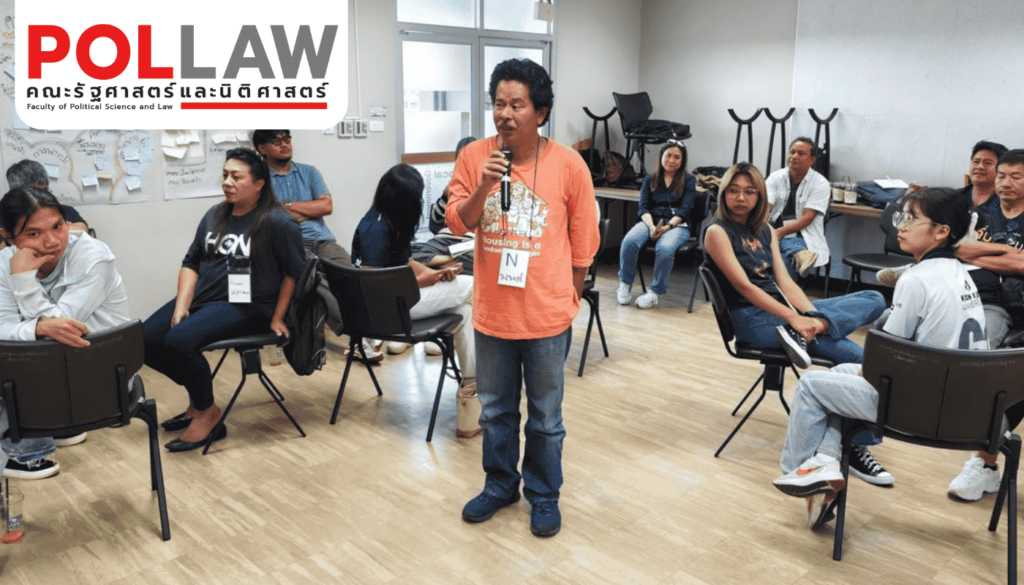
Economic and social inequalities, particularly among homeless populations in the Eastern Economic Corridor (EEC), remain critical challenges to achieving social justice and sustainable development. Despite significant economic growth in the EEC, vulnerable groups such as the homeless continue to face barriers to accessing basic rights, including housing, healthcare, and a dignified livelihood. Civil society networks working with homeless populations in the area often face limitations in their capacity for data collection, evidence-based advocacy, and strategic coordination with other sectors. Strengthening the roles and capabilities of community leaders and civil society actors is therefore essential to effectively promote the health and well-being of homeless individuals. To address these needs, the Faculty of Political Science and Law, Burapha University, under the leadership of Asst. Prof. Dr. Sakrit Isariyanon, initiated the project “Development and Enhancement of Academic and Professional Networks to Reduce Inequalities and Promote Health Equity for Specific Population Groups.” The project aims to empower civil society leaders by enhancing their knowledge, practical skills, and networking capacities across the EEC region.
This initiative is closely aligned with several United Nations Sustainable Development Goals (SDGs): SDG 1: No Poverty SDG 3: Good Health and Well-Being SDG 10: Reduced Inequalities SDG 11: Sustainable Cities and Communities SDG 16: Peace, Justice, and Strong Institutions
The project aspires to build a collaborative and resilient civil society network capable of supporting homeless populations, fostering innovative health interventions, and contributing to a more inclusive and equitable society where no one is left behind.
The aims of project
1. Enhance the capacity of civil society leaders in the EEC to support the health and well-being of homeless populations.
2. Promote knowledge exchange and best practices among academics, practitioners, and community leaders.
3. Develop effective data collection systems for homeless populations to inform policy and advocacy.
4. Foster collaborative networks between academic institutions, civil society organizations, and communities. Contribute to achieving SDGs, specifically SDG 1 (No Poverty), SDG 3 (Good Health and Well-Being), SDG 10 (Reduced Inequalities), SDG 11 (Sustainable Cities and Communities), and SDG 16 (Peace, Justice, and Strong Institutions).
The project “Development and Enhancement of Academic and Professional Networks to Reduce Inequalities and Promote Health Equity for Specific Population Groups” was implemented through the following key activities:
Capacity Building Workshops
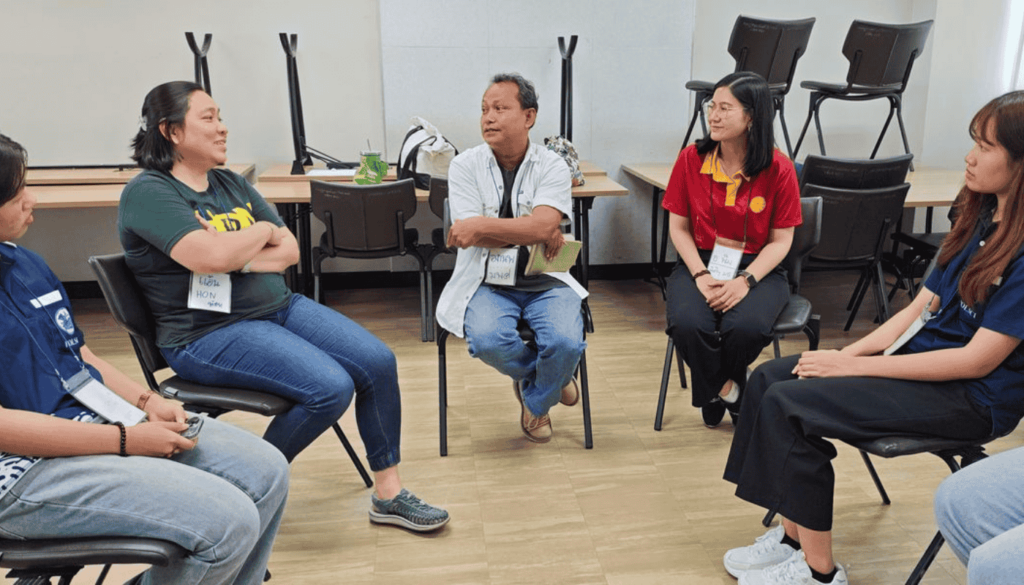
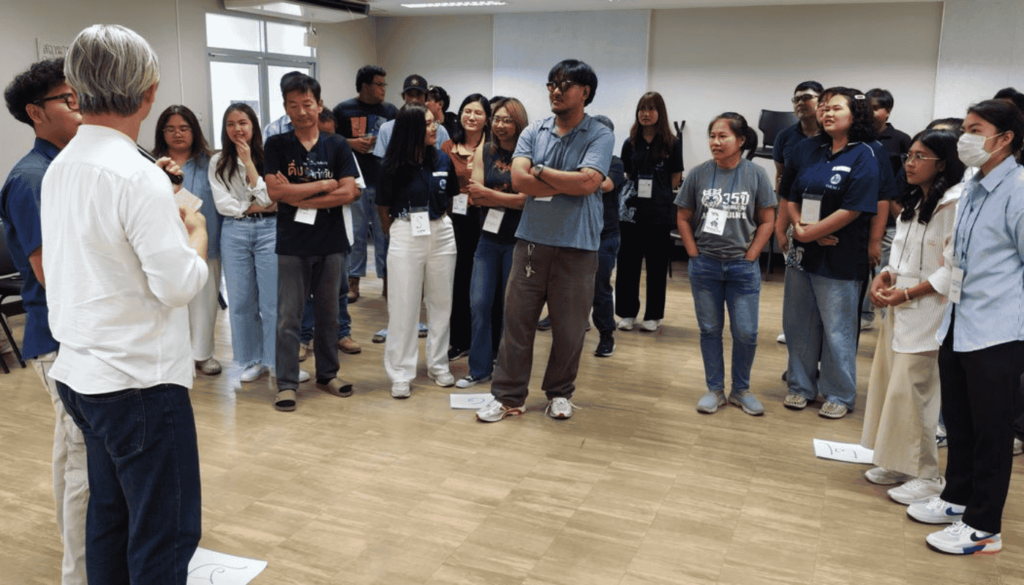
Organized a two-day participatory workshop focusing on developing leadership skills, understanding homelessness issues, and enhancing the capacity of civil society actors. Sessions included expert-led discussions, group activities, and experience-sharing forums.
Knowledge Sharing and Field-Based Learning
Conducted panel discussions and practical training on data collection methodologies, narrative building, and advocacy strategies for working with homeless populations. Facilitated knowledge exchange between academics, practitioners, and community leaders. Field Surveys in Targeted Urban Areas
Participants conducted field visits and surveys in Pattaya City, Bang Saen, and Chonburi City to observe and document the living conditions and needs of homeless populations. Field data was used for experiential learning and reflection sessions.
Development of a Homelessness Database
Trained participants on data gathering and recording methods to develop a preliminary database of homeless individuals in selected areas, aiming to support future advocacy and policy initiatives.
Network Strengthening and Future Planning
Organized sessions to discuss the next steps, strategic plans, and collaboration frameworks for strengthening networks across the EEC to sustainably address homelessness and health inequities.
Alignment with Sustainable Development Goals (SDGs)
Ensured all activities were designed to contribute directly to achieving SDG 1 (No Poverty), SDG 3 (Good Health and Well-Being), SDG 10 (Reduced Inequalities), SDG 11 (Sustainable Cities and Communities), and SDG 16 (Peace, Justice, and Strong Institutions).
The impacts
1.Enhanced the leadership skills and practical capacities of civil society actors working with homeless populations.
2.Increased awareness and understanding of homelessness issues among participants.
3.Developed a preliminary database system for homeless individuals in key urban areas.
4.Fostered collaboration between academics, practitioners, and community networks.
5.Strengthened community-based initiatives aimed at promoting health equity for vulnerable groups.
6.Generated actionable insights for policy advocacy and future interventions.
7.Contributed to the achievement of SDGs 1, 3, 10, 11, and 16 at the local level.
8.Empowered local communities to address homelessness through evidence-based strategies.
9.Built momentum for continued multi-sectoral collaboration in the EEC region.
Project Leaders: Asst. Prof. Dr. Sakrit Isariyanon,
Faculty of Political Science and Law