
Thai Cultural Heritage Preservation Project: Songkran Festival 2025
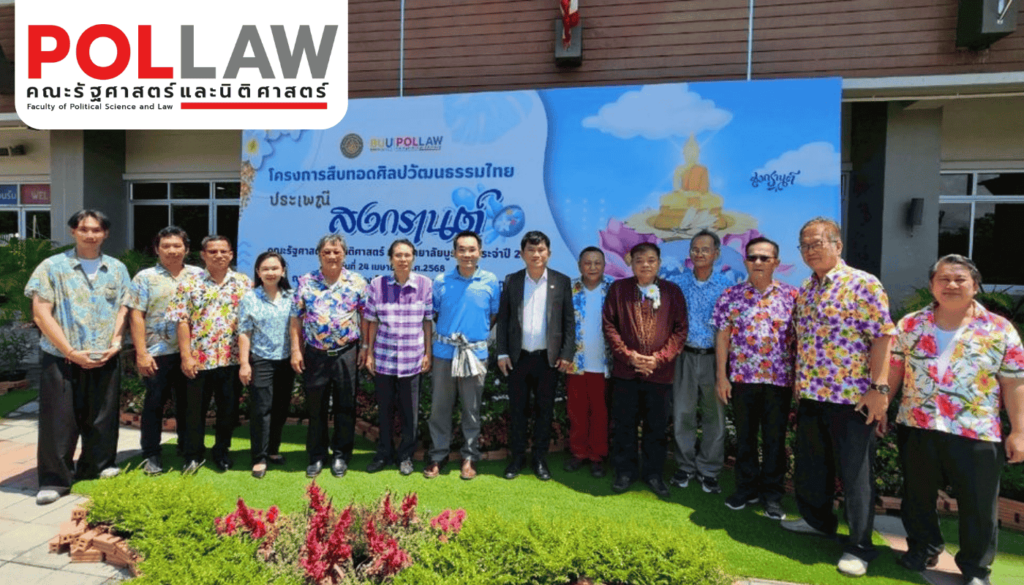
Thailand is a country rich in cultural heritage, with traditions passed down from generation to generation. Among these, the Songkran Festival—celebrated as the traditional Thai New Year—is one of the most significant. It embodies values of respect, gratitude, unity, and joy, often expressed through family reunions, water-pouring rituals to honor elders, and community bonding activities. In recognition of its cultural importance, UNESCO has inscribed the Songkran Festival on the Representative List of the Intangible Cultural Heritage of Humanity.
As part of its commitment to cultural preservation, the Faculty of Political Science and Law, Burapha University, recognizes the importance of sustaining Thai traditions in a rapidly modernizing society. The Songkran Festival offers an ideal platform to promote cultural continuity, intergenerational learning, and social cohesion within the university environment. By celebrating this heritage in an academic setting, the project not only educates young people about Thai values and identity but also fosters a sense of belonging and pride in their cultural roots.
This project is also aligned with the United Nations’ Sustainable Development Goal 11: Sustainable Cities and Communities, particularly Target 11.4, which calls for strengthening efforts to protect and safeguard the world’s cultural heritage. Cultural sustainability is essential for building inclusive and resilient communities, and this project directly contributes to that goal through participatory activities that engage students, faculty, and staff.
Moreover, the initiative reflects the university’s mission to integrate education with cultural development, encouraging lifelong learning and social responsibility. It reinforces the role of academic institutions not only as centers of knowledge but also as stewards of cultural and moral values.
In summary, the Thai Cultural Heritage Preservation Project: Songkran Festival 2025 serves as a meaningful bridge between tradition and contemporary academic life. It enhances cultural literacy, nurtures community spirit, and contributes to the long-term vision of sustainable and culturally vibrant societies.
The aims of projects:
1.To preserve and promote Thai cultural heritage, particularly the Songkran Festival, through meaningful and participatory activities within the academic community.
2.To foster a deeper understanding and appreciation of traditional values among students, faculty, and staff, thereby strengthening cultural identity and intergenerational connection.
3.To support the university’s mission and contribute to Sustainable Development Goal 11 by encouraging community engagement and the safeguarding of intangible cultural heritage.
The Thai Cultural Heritage Preservation Project: Songkran Festival 2025 was successfully organized on April 24, 2025, at the multipurpose hall of the Faculty of Political Science and Law, Burapha University. The project was designed to promote cultural appreciation and foster intergenerational connections among members of the academic community. Its implementation was carefully planned to ensure inclusivity, participation, and the meaningful transmission of Thai traditions.
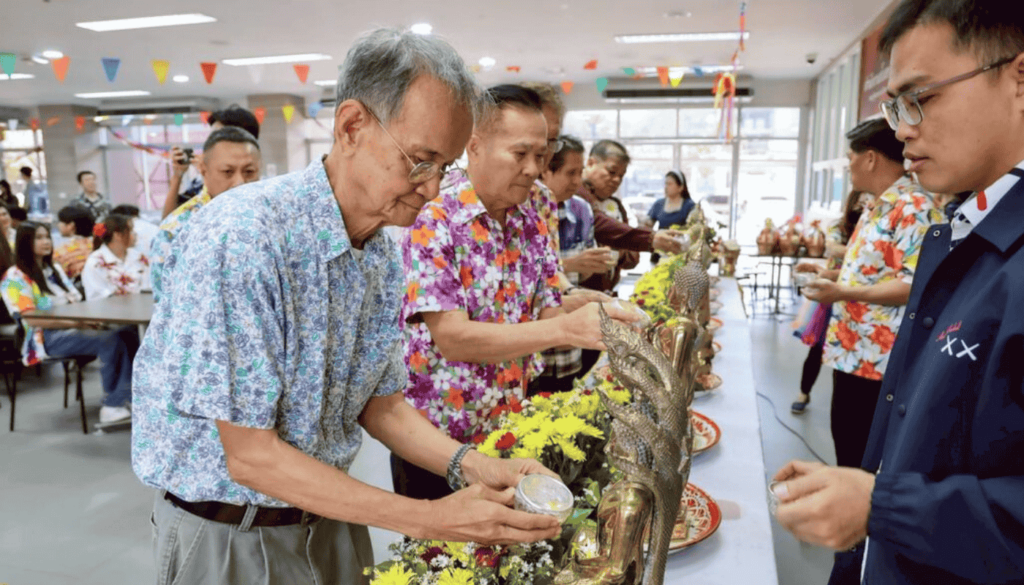
Preparations for the event included the decoration of the venue to reflect the spirit of the Songkran Festival, rehearsals for traditional Thai performances, and the arrangement of commemorative gifts for honoured guests. The event began with a symbolic ceremony led by the Dean, who changed the cloth draped over the Buddha image housed within the faculty—an act representing renewal and reverence. This was followed by a ceremonial bathing of the Buddha image (Song Nam Phra), reinforcing the spiritual and cultural significance of the festival.
A formal opening address was then delivered by the Dean, welcoming distinguished guests including university administrators, faculty board members, and retired and current staff. The heart of the ceremony was the traditional Rod Nam Dam Hua ritual, where younger participants poured water over the hands of senior faculty members to express gratitude and receive blessings. This act of cultural continuity and mutual respect highlighted the project’s core values of humility, unity, and tradition.
Following the ceremony, all participants shared a communal lunch, providing an opportunity for informal interaction and social bonding.
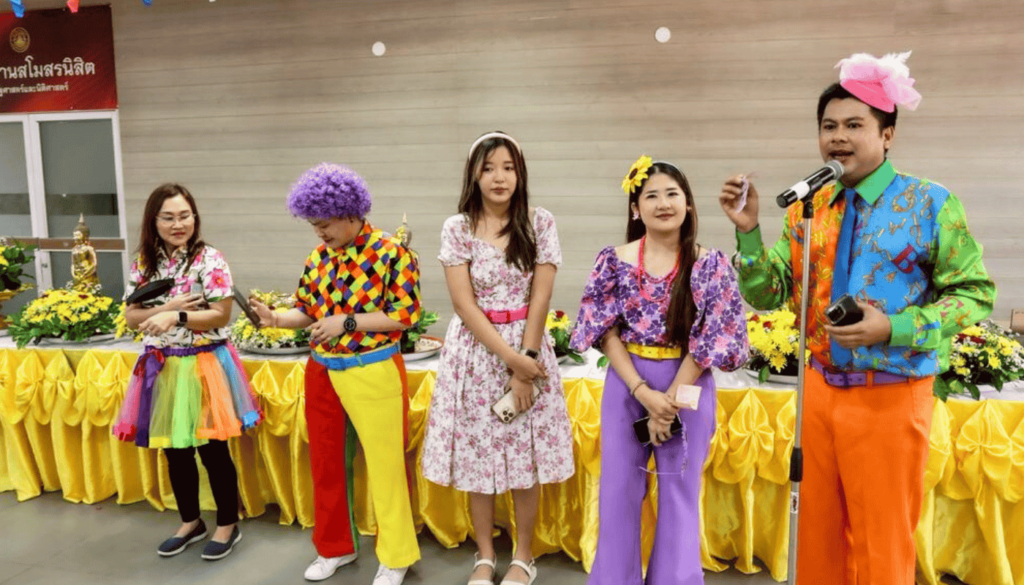
The afternoon featured a performance of classical Thai dance and music, reinforcing the aesthetic beauty and historical richness of Thai performing arts. Participants, dressed in traditional Thai attire under the theme “Mon Rak Luk Thung”, added vibrancy to the event while celebrating their cultural identity with pride.
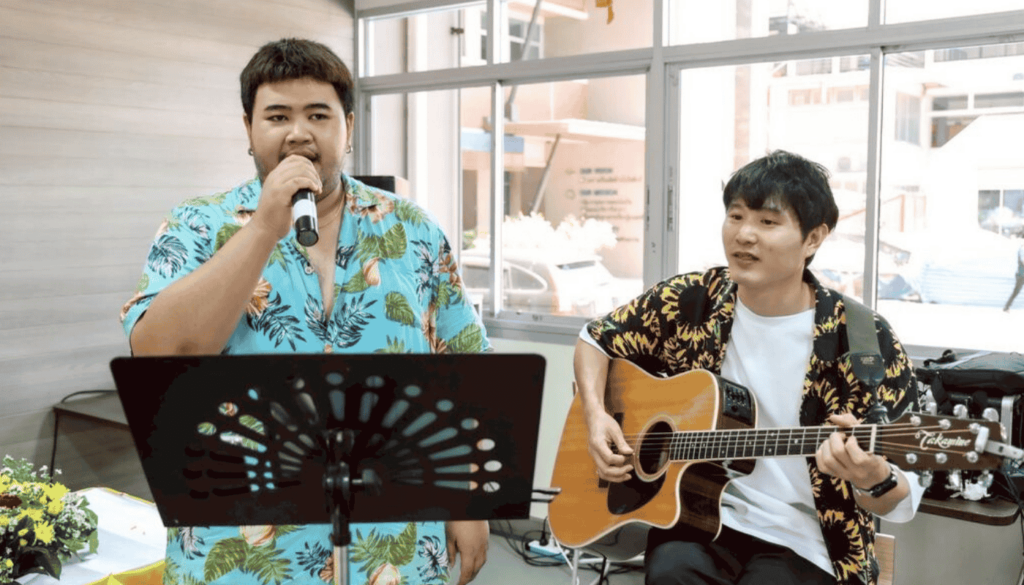
A total of 106 individuals participated in the project, representing various departments and roles within the faculty. Their engagement reflected a shared commitment to preserving Thai cultural heritage and fostering a sense of belonging within the university. Through this project, the Faculty of Political Science and Law not only upheld the Songkran tradition but also contributed to Sustainable Development Goal 11 by supporting the preservation of intangible cultural heritage and strengthening community ties in an academic setting.
The Thai Cultural Heritage Preservation Project: Songkran Festival 2025 had a meaningful impact on the academic community by fostering cultural awareness, strengthening social bonds, and promoting intergenerational respect. Participants gained a deeper appreciation for traditional Thai values through hands-on cultural engagement, including rituals, performances, and traditional attire. The event created a space for reflection on the importance of heritage in shaping identity and community resilience. Furthermore, the project supported the university’s commitment to Sustainable Development Goal 11 by actively contributing to the protection and promotion of intangible cultural heritage, thus reinforcing the role of educational institutions in building culturally sustainable communities.
Project Leader: Mr.Touch Khanthaprasit (Acting Head of the Dean’s Office.),
Faculty of Political Science and Law